With Lemon, Thyme & Crispy Skin Finish
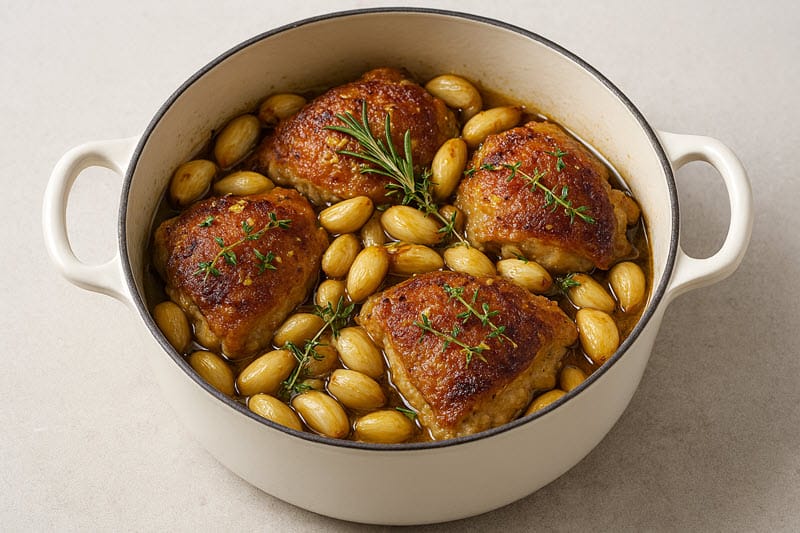
This dish balances two pleasures: deeply tender, slow‑roasted chicken infused with sweet garlic and lemon—and a final high‑heat finish that delivers beautifully crisp skin. The result is rustic, luxurious, and unmistakably comforting.
Why This Recipe Works
- Slow roast makes garlic sweet, not sharp
- Thighs stay juicy and forgiving
- High-heat broiled finish guarantees crispy skin
- A cast-iron (Dutch oven) pot produces superior results to a restaurant range
Slow-Roasted Chicken Thighs with Forty Cloves of Garlic
Deeply tender, slow-roasted chicken thighs infused with sweet garlic, lemon, and thyme, finished under high heat for beautifully crisp skin.
Ingredients
Equipment
- Enameled cast-iron Dutch oven (oven-safe)
- Rimmed sheet pan / jelly roll pan
- Parchment paper
- Immersion (stick) blender — optional
Method
- Roast the squash. Preheat the oven to 425°F. On a parchment-lined sheet pan, toss the cubed butternut squash with olive oil and salt; bake , then set aside to serve alongside the finished dish.Tip: Cook the squash separately — adding it to the mirepoix softens it too much and over-sweetens the sauce.
- Sear the chicken. Heat the Dutch oven over medium-high for , then swirl in 2 tbsp olive oil until it shimmers. Add the thighs skin-side down and sear undisturbed until deeply golden, then flip and cook more. Work in batches of 4–5, then transfer to a plate.Tip: Pat the thighs very dry and salt them — moisture creates steam that glues the skin to the pot. Don’t move them for at least 5 minutes; if the skin resists when lifted, give it another minute. Avocado or light olive oil releases more easily than extra-virgin.
- Build the base. In the same pot, cook the mirepoix (onion, carrot, and celery in a 2:1:1 ratio) for . Add the ginger and cook , then the garlic and cook more.
- Slow roast. Return the chicken skin-side up, nestled among the garlic. Scatter the lemon zest, rosemary, and thyme over the top. Cover with a lid or foil and roast at 350°F for , until the chicken is exceptionally tender and the garlic is soft and buttery.
- Crisp the skin. Move the thighs to a foil-lined sheet pan, skin-side up. Spoon off excess sauce (reserve all sauce and garlic) and sprinkle with smoked paprika. Raise the oven to 425–450°F and roast uncovered , until the skin is golden, blistered, and crisp.Tip: Alternatively, broil for 2–5 minutes, watching closely.
- Make the garlic-lemon gravy. Remove about 80% of the mirepoix from the pot, then set it over medium heat and mash several garlic cloves into the pan juices (a stick blender makes it smoother). Whisk the Better Than Bouillon into ¾ cup chicken broth. Deglaze the pot with the white wine and simmer , scraping up the browned bits, then stir in the bouillon mixture and simmer until glossy. Off the heat, swirl in the salted butter, add the chopped parsley, and finish with the reserved lemon juice. Taste and adjust salt.
- Serve. Spoon mirepoix and roasted squash onto each plate, set a thigh on top, and add a generous spoonful of gravy alongside. Serve immediately with crusty bread.Tip: Encourage guests to spread the softened garlic like butter — it’s the heart of the dish.
Notes
- Why crisp at the end? Covered roasting creates tenderness; a high-heat finish restores crisp texture.
- Do not remove the skin before cooking — it protects the meat and enriches the sauce.
- Leftovers make exceptional pasta, risotto, or grain bowls.
- Use organic, free-range chicken (such as Pasture Bird). Adding chopped ginger with the garlic supports protein digestion for Blood Type O or B.
Where it lands on the Intestinal food lists
Cross-referenced against Carolyn Mein’’s food lists for the Intestinal body type:
Solidly type-aligned — every food is “Frequently” or “Moderately” on a good day (5 in the top tier) and none are “Rarely” foods, though several ease back under stress.
- Chicken Frequently
- Squash (acorn, butternut) Frequently
- Onions (chives, green, red, white, yellow, vidalia) Frequently
- Garlic Frequently
- Butter Frequently
- Carrots Moderately holds under stress
- Celery Moderately holds under stress
- Lemons Moderately holds under stress
- Chicken broth Moderately holds under stress
- Wine (red, white) Moderately
- Olive oil Moderately holds under stress
- Parsley Moderately holds under stress
- Salt Moderately holds under stress
Scored against Carolyn Mein’s Intestinal Profile. See the full Healthy vs. Sensitive crosswalk.
Method
Step 1: Sear the Chicken
Use organic, free-ranged chicken from Pasture Bird.
Preheat oven to 350°F. Pat chicken thighs very dry and season generously with salt and pepper.
“Place chicken skin-side down and let it sear undisturbed until it naturally releases from the pot. If it resists when lifted, give it another minute.”
Heat the oven-safe Dutch oven over medium-high for 3 minutes. Then swirl in 2 tablespoons extra virgin olive oil in the Dutch oven over medium‑high heat until the oil shimmers. Use enough oil to create a thin layer on the bottom of the pot but not so much the oil pools. If the oil looks calm, then the pot isn’t hot enough. Then add the chicken with skin-side down. Should hear an audible sizzling the moment the chicken hits the pot. Sear the chicken thighs until deeply golden and crisp, about 5–6 minutes. Do not move the chicken for at least 5 minutes else the chicken skin will stick to the pot. Use tongs to gently lift the chicken. If it resists, then wait another minute. If it lifts cleanly, then it is ready. Flip and cook 1–2 minutes more. Transfer chicken to a plate.
Troubleshooting Tip:
To prevent the chicken skin from sticking to the pot, pat the thighs very dry and apply salt (it pulls moisture out). Remember, moisture on the chicken creates steam, which acts like glue. But dry skin will render the fat in the chicken and will release from the pot without sticking. Also, you can substitute avocado oil or a light olive oil for the extra-virgin olive oil to make the chicken easier to release.
Step 2: Bloom the Garlic
French cooking - Mirepoix is the term for a mixture of diced onions, carrots, and celery, usually in a 2:1:1 ratio (two parts onions to one part each of carrots and celery). It’s cooked slowly in butter or oil to release sweetness and aromas without browning.
Along with the garlic, add some chopped ginger to improve protein digestion for those with Blood Type O or B.
Add Butternut Squash, peeled, seeded, and cut into 1-2 inch chunks. Alternatively can use Acorn squash.
Reduce heat to medium. Large chunks of onions, celery, and carrots. Add the remaining olive oil and all garlic cloves to the pot. Cook gently for 1–2 minutes, stirring, until fragrant and lightly golden (do not brown). Remove from heat.
Step 3: Slow Roast
Return chicken thighs to the pot, skin‑side up, nestling them among the garlic. Scatter thyme, rosemary, and zest of both lemons evenly over the top.
Cover tightly and transfer to the oven. Roast for 75–90 minutes, until the chicken is exceptionally tender and the garlic cloves are soft and buttery.
Step 4: Crisp the Skin
Remove the pot from the oven. Transfer chicken thighs to a foil‑lined sheet pan, skin‑side up. Lightly spoon off excess sauce from the skin (reserve all sauce and garlic). Sprinkle with smoked paprika.
Increase oven temperature to 425–450°F. Roast the chicken uncovered for 10–15 minutes, until the skin is golden, blistered, and crisp.
(Alternatively, broil for 2–5 minutes, watching closely.)
Step 5: Garlic-Lemon Sauce/Gravey
While the chicken crisps, place the Dutch oven over medium heat. Mash several garlic cloves directly into the pan juices. Add some of the roasted butternut squash.
In a small bowl, whisk Better Than Bouillon into the ¾ cup of chicken broth until dissolved. Deglaze the pot by adding white wine to the pot and simmer 2–3 minutes, scraping up browned bits. Stir in the bouillon mixture and simmer until lightly reduced and glossy.
Remove from heat and swirl in salted butter. Add chopped parsley. Then juice the lemon and stir in the lemon juice. Taste and adjust with salt if needed.
To Serve
Arrange crispy chicken thighs on a platter and spoon garlic and sauce generously over and around the chicken. Serve immediately with crusty bread, mashed potatoes, polenta, or roasted vegetables.
Encourage guests to spread the softened garlic like butter—it’s the heart of the dish.
References
Williams Sonoma Chicken with 40 Garlic Cloves
Good Eats by Alton Brown 40 Cloves and a Chicken
Dr Eric Berg - You May Never Eat CHICKEN Again After Watching This
Whole Chicken or Chicken Thighs from Pasture Bird located in Butler GA and available at Sprouts or online
Bobby Parrish - Where To Buy The BEST Chicken?
The Plant Paradox by Dr Steven Gundry
Super Gut by Dr William Davis
Eat Right for your Type by Dr. Peter D’Adamo
Eat Right for Your Body Type by Dr. Carolyn Mein