Introduction
Reasons to Make Soap at Home
Remember, we are children of God. We are creators like Him, not consumers. This is why we are driven to learn, grow, and achieve; it makes us like our Heavenly Father. Building upon that, several compelling reasons exist for making soap at home. It gives individuals complete control over the ingredients, enabling them to create products free from harsh chemicals, artificial fragrances, colorings, and preservatives often found in commercial soaps. This is particularly appealing for those with sensitive skin or specific allergies.
Home soap-making also offers a creative outlet, allowing crafters to experiment with various oils, scents, colors, and designs to create unique, personalized products. Many find the process relaxing and rewarding, combining chemistry, art, and self-care elements.
From an economic standpoint, making soap is about creating high-quality, not low-cost. The soap ingredients alone will cost about $3.50-$4.00 a bar, depending on the essential oils used. Let alone factoring in your time and purchasing equipment (soap molds, stick blenders, scales, etc). Remember, the business of large soap manufacturers is sales, marketing, and product distribution, not necessarily producing the highest-quality soap. A home soap maker cannot compete with these corporations on this level. However, the home soap maker has the advantage of making the highest-quality soap. So, for some, homemade soap can grow into a small craft-based business opportunity that markets to a specific niche of customers, those looking for a product that can not only clean them but can lift their spirits and restore their health. Like a Balm in Gilead.
Is there no balm in Gilead; is there no physician there? why then is not the health of the daughter of my people recovered?

In ancient times there came from Gilead, beyond the Jordan, an ointment made from the gum of a tree. It was a major commodity in trade. The Ishmaelite traders who purchased Joseph from his brothers were carrying this balm of Gilead to Egypt (Genesis 37:25)
It became symbolic for the power to soothe and to heal.
There is a Balm in Gilead, To make the wounded whole, There is a Balm in Gilead, To heal the sin sick soul.
Balm of Gilead by Elder Boyd K. Packer, October 1987 General Conference
Crafting your soap at home offers many benefits beyond mere cleansing. By making soap yourself, you gain complete control over the ingredients, creating a product perfectly tailored to your skin’s needs and free from harsh chemicals often found in commercial soaps. This personalized approach can be especially beneficial for sensitive skin or specific allergies.
Homemade soap often retains its natural glycerin, a moisturizing byproduct of the soap-making process that’s frequently removed from commercial soaps, resulting in a more nourishing and gentle product. The creative possibilities are endless - you can experiment with different scents, colors, and additives, creating unique bars that reflect your personality or cater to specific purposes, such as exfoliation or aromatherapy. Additionally, it’s a fulfilling hobby that connects you with age-old traditions while providing a sense of accomplishment. Whether you’re looking to save money, indulge in a creative outlet, or simply ensure you’re using the purest products on your skin, homemade soap offers a rewarding journey into natural skincare.
Homemade soaps make thoughtful, personalized gifts for loved ones, friends, and family.
Lastly, the satisfaction of using a product made with one’s own hands adds a special touch to daily self-care routines, turning a mundane task into a more meaningful experience.
Soap Basics
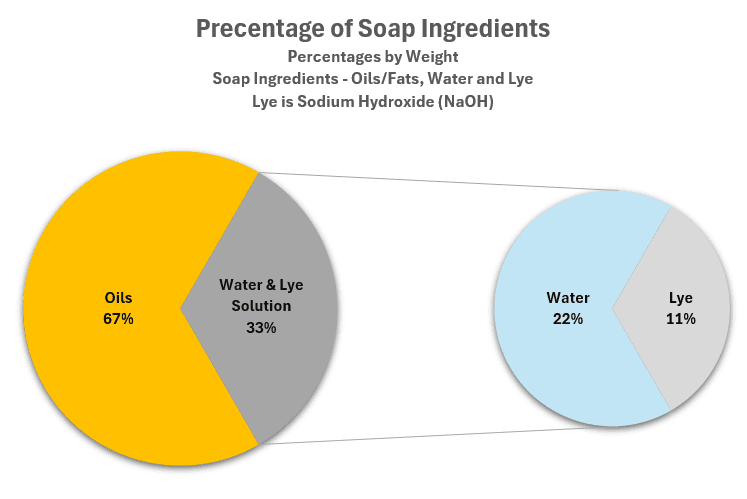
The basic soap ingredients (excluding color dyes, essential oils, and fragrances) are just oils/fats, water, and lye (also known as caustic soda, sodium hydroxide, NaOH). A good rule of thumb for the weight of each ingredient is 67% oils and 33% water and lye solution by weight. The water and lye solution are also the exact percentages, with 67% water and 33% lye by weight.
Use the powder form of lye, which typically has a 100% lye concentration. If you purchase a liquid form, the lye concentration is not 100% but diluted with water, typically 50% lye and 50% water. So, the calculation will be more involved. Again, using the powder or pellet form of lye is recommended.
Bar soap oils are typically a combination of multiple oils, such as palm oil, coconut oil, and olive oil, as is the case with Palmolive Brand soaps.

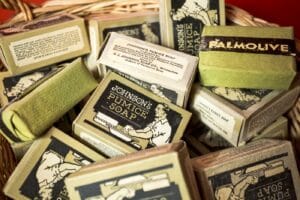
In 1898, the [B. J. Johnson & Company] introduced the soap that would become one of Milwaukee’s most famous native products. Using palm and olive oils as well as cocoa butter, the result was a distinctive light green bar the company called Palmolive. The product proved wildly popular, thanks in large part to an advertising campaign that promoted it as an exotic cleanser that would have favored in the age of the Pharaohs.
The Story Behind This Bar of Palmolive Soap by Matthew Prigge, Milwaukee Magazine, January 25, 2018
Soap and glycerine are formed by a chemical process called “saponification” when combining three ingredients: 1) oils and/or fats, 2) water, and 3) sodium hydroxide (NaOH). Glycerine is a trihydric alcohol. Making soap at home can be broken down into two stages: first, the base soap, and second, adding essential oils, colors/dyes, and fragrances.
It is very generally known that soap is made by combining a fat or oil with a water solution of sodium hydroxide (NaOH, caustic soda lye), or potassium hydroxide (caustic potash). Sodium soaps are always harder than potassium soaps, provided the same fat or oil is used in both cases.
Soap-Making Manual: A Practical Handbook on the Raw Materials, Their Manipulation, Analysis and Control in the Modern Soap Plant by Edgar George Thomssen
Infographic How To Make Soap
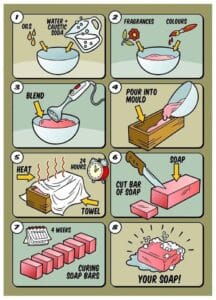
In (H3 infographic - how to make soap) the infographic below, note that in step 2, we typically add essential oils and/or fragrances just after the oils and water+lye solution are mixed. Some soap makers believe that the heat from a fresh mixture of the water+lye solution will destroy the essential oil. It is preferred to only add the essential oil at a temperature below 100 F. Briefly blend with a hand-held stick (immersion) blender (step 1), add essential oils (step 2), then (step 3) blend again once the mixture has a honey-like consistency, which is called “trace” in soap-making vocabulary. Pour into the mold (step 4). Colors can be added when making the water and lye solution at the beginning of (step 1).
Step 1 Soap Ingredients
Each soap-making ingredient plays a crucial role in creating the bar of soap. Oils and fats form the base of the soap, providing moisturizing properties and influencing the soap’s hardness, lather, and cleansing ability. Different oils and fats contribute unique qualities: olive oil creates a mild, moisturizing bar, while coconut oil produces abundant lather and hardness.
Lye (Sodium Hydroxide) is the alkaline component that initiates the saponification process, reacting with the oils to create soap. Without lye, true soap cannot be made. Water acts as a reagent medium for the lye, allowing it to dissolve and mix evenly with the oils and fats. Most of this water evaporates as the soap cures, leaving a more rigid bar.
Essential oils add therapeutic properties. Additionally, natural additives like herbs, clays, or oatmeal can provide texture, color, and additional skin benefits.
Colorants, whether natural (like plant-based powders) or synthetic (like micas), give the soap its visual appeal.
Finally, some soap makers add extra ingredients like sodium lactate to harden the bar or sugar to boost the lather.
Understanding the role of each ingredient allows soap makers to formulate recipes that balance cleansing power, skin moisturizing properties, and aesthetic appeal.
No. 1 Fats, Oils, Esters
From above, we know the rule of thumb is to use 67% fats/oils by weight when making soap. The next question is, what combination of fats/oils will produce a high-quality soap? This is where the INS (Iodine aNd Saponification) value comes into play in a soap recipe. See the Saponification Values listed below in this blog’s reference section.
This Barefoot Betters blog will focus on the combination of olive and coconut oil, readily available at Costco and Sam’s Club. Ideally, the combination of oils will produce an INS (Iodine aNd Saponification) value near 160 to make a bar soap that is neither too soft nor too hard. For example, the INS value for Olive oil is 109, and the INS value for Coconut oil is 258.
Using a spreadsheet like soapsheet.xlt by Chris Mathes (see Miller’s Homemade Soap Pages - Instructions for Downloading Soapsheet), a ratio of 10.5 oz of olive oil and 5.5 oz of coconut oil will give us combined INS = 160. Here is the calculation done by hand:
Soap INS = INS of oil x weight of oil / combined weight of all oils
Olive oil INS is 109. Calculation is 109 x 10.5 / (10.5 + 5.5) = 71.5
Coconut oil INS is 258. Calculation is 258 x 5.5 / (10.5 + 5.5) = 88.7
Combined INS of oils is 71.5 + 88.7 = 160.2 which is practically the ideal 160.
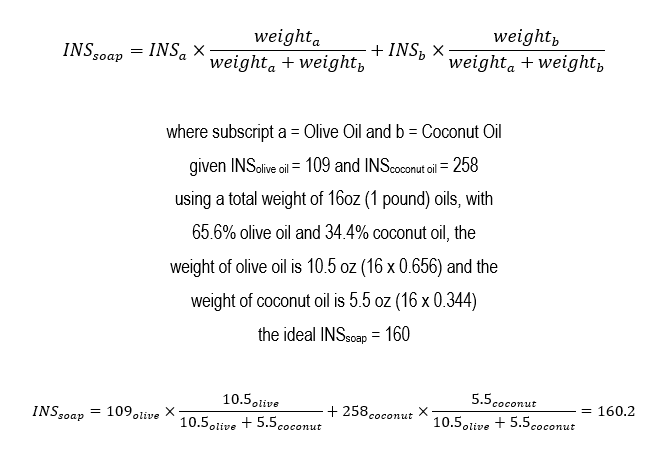
Using an INS value of 160 in your soap recipes will help you determine the optional percentages of combined oils to produce an excellent soap bar. So, download Chris Mathes’ spreadsheet soapsheet.xlt and give it a go.
No. 2 Water
Distilled water is recommended when making soap. This is to avoid potential issues with domestic tap water, which typically contains dissolved calcium and/or magnesium, known as hard water, and disinfectants such as chlorine (see EPA Drinking Water Regulations) added by a municipal water treatment plant.
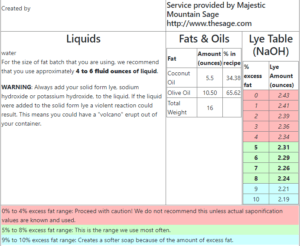
The weight of the water and lye solution typically ranges between 25% and 50% of the weight of the oil. In this example, we will use a solution that is 33% the weight of oil(s). The ratio of water to lye (NaOH) is also 2:1. This gives a lye concentration of 33%. Given 16 oz of water and lye solution, the weight of water = 16 oz x 67% = 10.72 oz water. The weight of lye = 16 oz x 33% = 5.28 oz lye.
The amount of water required is calculated based on the rule of thumb of one pound of water for every three pounds of oils. There are other rules of thumb out there, e.g. six ounces of water per pound of oils, ala the MMS calculator, but I prefer the 1:3 rule. For liquid soap recipes the amount of water is three times the total weight of the KOH.
Soapsheet Notes and FAQ by Chris Mathes
- Soapmaking Friend - Lye Calculator
- Majestic Mountain - TheSage.com - Lye Calculator
- Soapcalc.net - soap recipe calculator
- Wholesale Supplies Plus - Lye Calculator
Here is a screenshot from TheSage.com Lye Calculator
No 3 Lye, Caustic Soda, Sodium Hydroxide, NaOH
Introduction - Using Lye to Create Soap
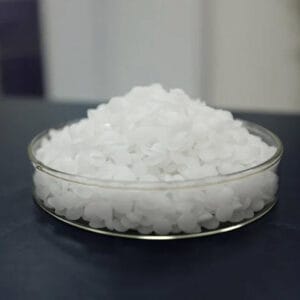
Vocabulary seems to be one of the main areas of confusion with soap-making. This is the case with lye, which is also known as Sodium Hydroxide (NaOH) and caustic soda. In this blog, will use the term lye because it uses the least amount of letters and is easy to spell :-)
Lye is a crucial ingredient in the soap-making process. This strong alkali is essential for the saponification reaction, combining with fats/oils and water to create soap. Lye should always be added to water (never the reverse) to prevent dangerous splashing.
The concentration of lye used in a soap recipe is critical and must be precisely calculated based on the types and amounts of oils used. Too much lye can result in harsh, irritating soap, while too little can lead to greasy, ineffective soap. After the saponification process, no active lye remains in properly made soap. Beginners need to understand that while lye is dangerous to handle, it’s necessary to create true soap. When made correctly, the final product is lye-free, safe, and beneficial for skin use.
Many soap makers use lye calculators to ensure the right proportions for their recipes, helping to create balanced, skin-friendly soap.
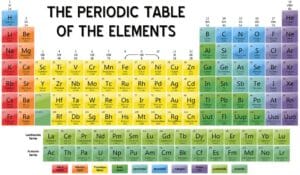
Lye is available in white powder or pellets at 100% NaOH concentration or in liquid form, typically at 50% NaOH and 50% water. From the chemistry periodic table Na=Sodium, O=Oxygen, H=Hydrogen. Hydroxide is the name of the chemical formula OH-. Combined, we get NaOH, which is pronounced Sodium Hydroxide.
- Caustic soda is one of the common names for sodium hydroxide (NaOH)
- It is also known as lye, although lye may refer to either potassium hydroxide (KOH) or sodium hydroxide (NaOH). Note KOH is also known as caustic potash and used in making liquid soaps.
- Pure caustic soda is sold for making candles or soap
- Impure caustic soda is found in drain cleaner
- Because lye is used to make illegal drugs, it’s harder to buy large quantities than in the past. However, small containers are available in stores and online (UPS carrier only)
What Is Caustic Soda and Where Can You Get It? by Anne Marie Helmenstine at ThoughtCo.
No. 4 Essential Oils (optional)
Introduction Essentials Oils in Soap
Adding essential oils to homemade soap can provide numerous health benefits, enhancing both the physical and mental well-being of users. Many essential oils possess antimicrobial properties, which can help combat bacteria and fungi on the skin, potentially reducing the risk of infections or skin issues. For instance, tea tree (melaleuca) oil is known for its powerful antibacterial effects, while lavender oil offers both antimicrobial and skin-soothing properties. Some oils, like peppermint or eucalyptus, can provide a refreshing and invigorating sensation, potentially improving circulation when applied to the skin. Others, such as chamomile or ylang-ylang, are celebrated for their calming effects, which can help reduce stress and promote relaxation during bathing or showering.
One of the main criticisms of adding essential oils to soap is the added cost and the belief that the essential oil only briefly touches the skin before it is washed off. True, the brief contact during washing may limit the therapeutic effects compared to the direct application of oils, but the aromatic benefits can still be substantial. The inhalation of these natural fragrances during use can stimulate the olfactory system, potentially influencing mood, reducing anxiety, and even alleviating headaches or nausea in some cases. However, it’s important to note that essential oils should be used in appropriate concentrations and with caution, as some individuals may be sensitive to certain oils.
There is quite a bit of debate about whether essential oils maintain their healthful properties when used in soapmaking. heat during saponification, contact with strong alkali, and short contact time during washing are all cited as reasons to doubt the benefit of using essential oils.
Even with brief skin contact, it is certainly better to apply a therapeutic essential oil than not; inhalation (of the fragrance, not the soap) is certainly the easiest mechanism to introduce essential oils into the body by exchange in the nasal mucous membrane.
Essentially Soap by Robert McDaniel, p. 60-61
Another downside of essential oils is their potency fades over time, say after a month. For instance, if you leave the cap off, citrus essential oil will start to evaporate.
So, why do essential oils seem to change or fade in soap making? Some components of essential oils saponify or alter during saponification, which can change the scent of the essential oil. Most essential oils continue to evaporate as the soap cures, too.
What You Need to Know About Using Essential Oils When You Make Soap by Modern Soapmaking
How Much Essential Oil
Highly recommend reading the blog How to Stop Guessing at the Essential Oil Usage Rate When You Make Soap by Modern Soapmaking. It discusses the International Fragrance Association (IFRA) standards on safe use of essential oils. We are interested in Category 9 of 11: wash-off products such as soap, bath gels, body washes, shampoo, conditioner, liquid soap, or shaving cream.
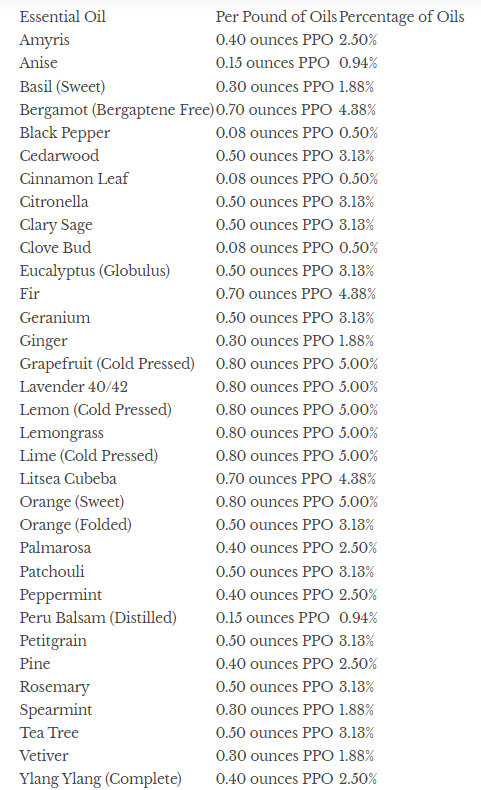
Use the Essential Oil calculator to determine the amount of essential oils to add to your soap recipe.
I recommend you join the Facebook Group - Essential Oil Consumer Reports admin is Dr. Robert S. Pappas (LinkedIn) and owner of Essential Oils University (EOU).
Fragrance Blending
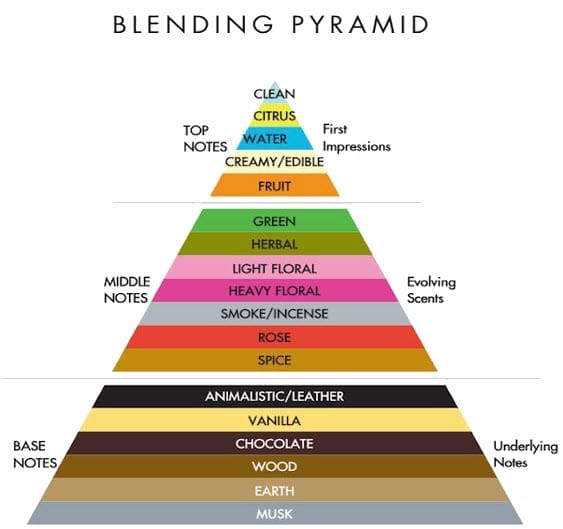
Essential oil blending for fragrance is a captivating art that can elevate homemade soaps from simple cleansers to aromatic experiences. By carefully combining different essential oils, soap makers can create unique and complex scents that delight the senses and offer various aromatherapy benefits. The process involves understanding the characteristics of individual oils, their therapeutic properties, and how they interact with one another. Mastering this skill allows crafters to produce soaps with harmonious top, middle, and base notes that unfold beautifully during use. Whether aiming for a refreshing citrus blend or a soothing floral bouquet, the possibilities for creative expression through fragrance blending are virtually limitless.
Many people approach fragrance blending as a science, selecting three oils to represent each of the three types of notes - top, middle, and base. This is fine, but remember that top notes are more volatile, fleeting, and light than middle and base notes, so it is usually advisable to physically add more of the oils representing top notes. Similarly, base notes are not only less volatile, they are frequently stronger, lingering longer than the others. Base notes, then, should represent the smallest volume added to your fragrance blend.
Essentially Soap by Robert S. McDaniel, p. 68
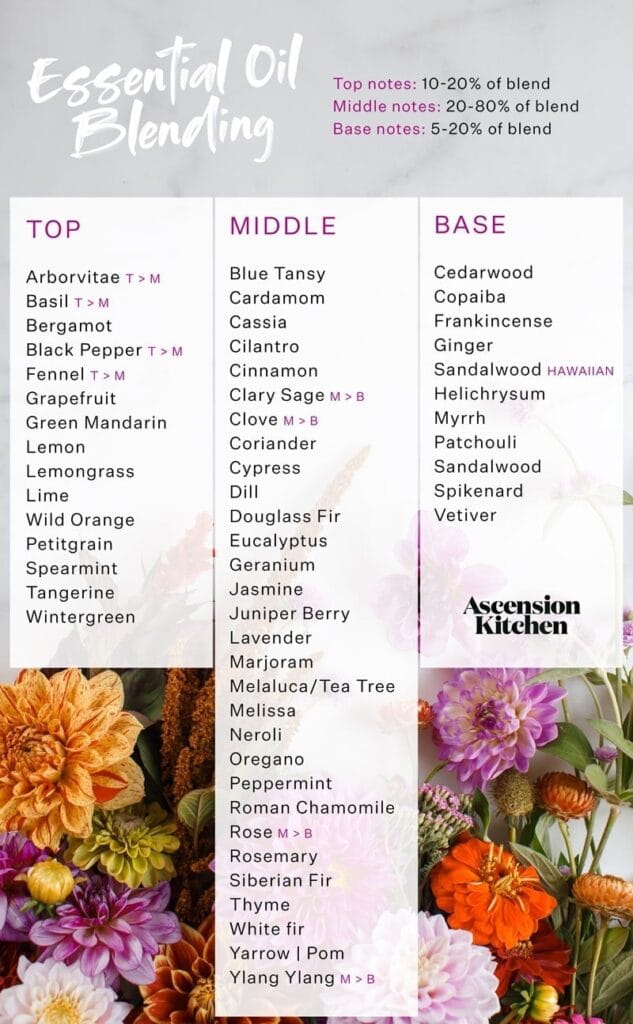
A brief discussion of the concept of top, middle, and base notes in fragrance blending for soaps, and their ideal percentages:
Top Notes: Top notes are the first scents you smell when using the soap. They’re typically light, fresh, and evaporate quickly. Examples include citrus oils (lemon, bergamot), light herbs (basil, peppermint), and some floral scents (lavender).
Middle Notes: Also called heart notes, these emerge as the top notes dissipate. They form the core of the fragrance and last longer than top notes. Examples include rose, geranium, ylang-ylang, and spicy oils like cinnamon or nutmeg.
Base Notes: These provide depth and longevity to the blend. They’re typically rich, heavy scents that emerge last and linger the longest. Examples include patchouli, sandalwood, cedarwood, and vanilla.
Ideal Percentages: The ideal ratio for blending these notes in soap making is often described as the 30-50-20 ratio (top-middle-base) in more detail and provide some tips for using this approach in soap making:
The 30-50-20 Ratio: This ratio puts more emphasis on the middle notes, which can create a more well-rounded and complex fragrance profile. Here’s a breakdown:
- 30% Top Notes: This higher percentage of top notes provides a strong initial impression and a burst of freshness.
- 50% Middle Notes: The increased proportion of middle notes forms a robust heart of the fragrance, giving it more body and complexity.
- 20% Base Notes: A smaller percentage of base notes still provides depth and longevity, but allows the other notes to shine more prominently.
Tips for using the 30-50-20 ratio:
- Balance intensity: Remember that some oils are naturally stronger than others. You might need less of a potent oil like patchouli (base note) compared to a softer scent like lavender (middle note).
- Consider longevity: While this ratio emphasizes middle notes, ensure your base notes are strong enough to anchor the scent throughout the soap’s life.
- Complement and contrast: Choose oils that work well together. For example, you might pair a fresh top note (like lemon) with a floral middle note (like geranium) and a woody base note (like cedarwood).
- Start simple: Begin with a three-oil blend, one for each note. As you gain experience, you can create more complex blends.
- Keep detailed notes: Record the exact amounts and percentages of each oil used. This allows you to replicate successful blends and adjust less successful ones.
- Consider the soap’s purpose: If you’re making an energizing morning soap, you might want to increase the top notes slightly. For a relaxing evening soap, you could boost the base notes a bit.
- Factor in soap chemistry: Some essential oils (especially citrus oils) can fade or change during the saponification process. You might need to adjust your ratios to compensate for this.
- Test before committing: Create small test batches or use fragrance testing strips to evaluate your blend before using it in a full batch of soap.
- Consider using fixatives: Certain base notes like benzoin or patchouli can help “fix” more volatile top notes, making the overall scent last longer.
- Be mindful of safety: Always check the safe usage rates for each essential oil, especially for leave-on products like soap. Some oils may need to be used in lower amounts for skin safety, such as citrus oils which discolor your skin when exposed to sunlight.
Remember, while the 30-50-20 ratio can be a helpful guideline, the art of fragrance blending often comes down to personal preference and experimentation. Don’t be afraid to adjust the ratios to suit your vision for the perfect soap scent.
No. 5 Colors (optional)
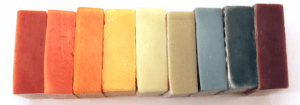
Adding colors (dyes and colorants) to your soap enhances its visual appeal and creativity. Hopefully, these colorings will improve its sellability.
Various options are available, from natural colorants like herbs, clays, and plant-based powders to synthetic micas and pigments designed explicitly for soap making.
Natural colorants often provide subtle, earthy tones and can contribute additional skin benefits, while synthetic options offer a wider range of vibrant hues and color stability. When using colorants, it’s crucial to choose those that are safe for skin contact and can withstand the high pH environment of the soap-making process. The timing of adding color is essential; some colorants are best mixed with oils before adding lye, while others are stirred in at trace. Experimentation is key, as different colorants may react differently based on the soap recipe and process used. Some colors may morph or fade over time, especially when exposed to light.
Soap makers often use techniques like layering, swirling, or embedding to achieve more complex color designs. A little colorant often goes a long way, and overuse can lead to staining of skin, bath tubs, or washcloths. As with all aspects of soap making, proper research and testing are essential to achieving the desired results safely and effectively.
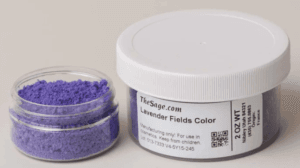
Majestic Mountain Sage has a nice selection of dry colorants that are cosmetic grade and safe to use in soap-making. See https://www.thesage.com/collections/colors
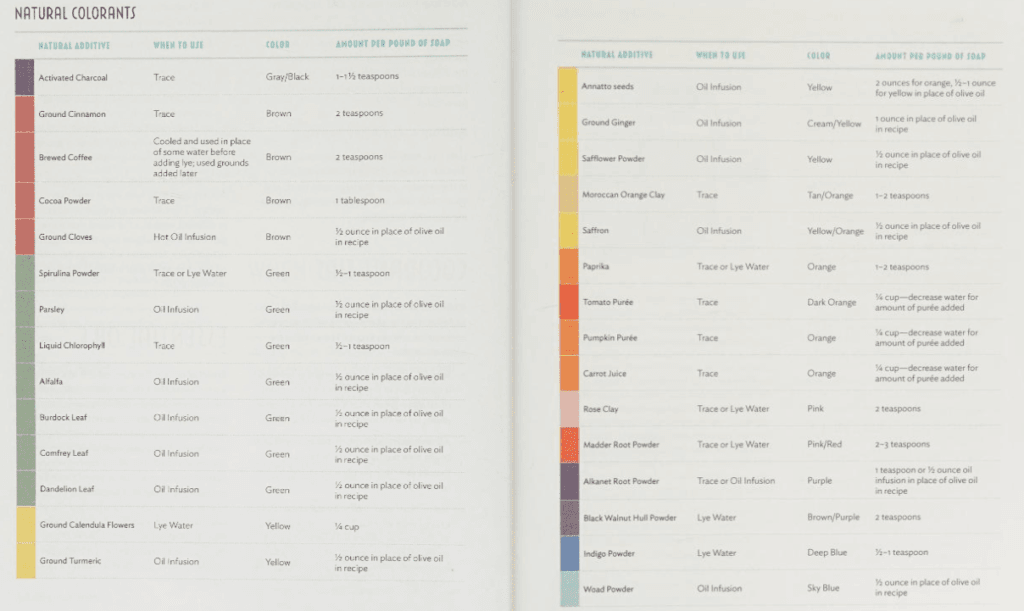
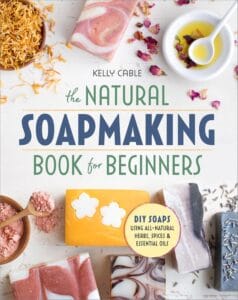
The Natural Soapmaking Book for Beginners by Kelly Cable has an informative table that shows the soap color when adding a certain natural additive, such as paprika.
Another source of natural soap colors (yellow, orange, pink, red, blue, purple, brown, green, black, and white) has been written by Tanya Anderson at https://lovelygreens.com/how-to-naturally-color-handmade-soap/
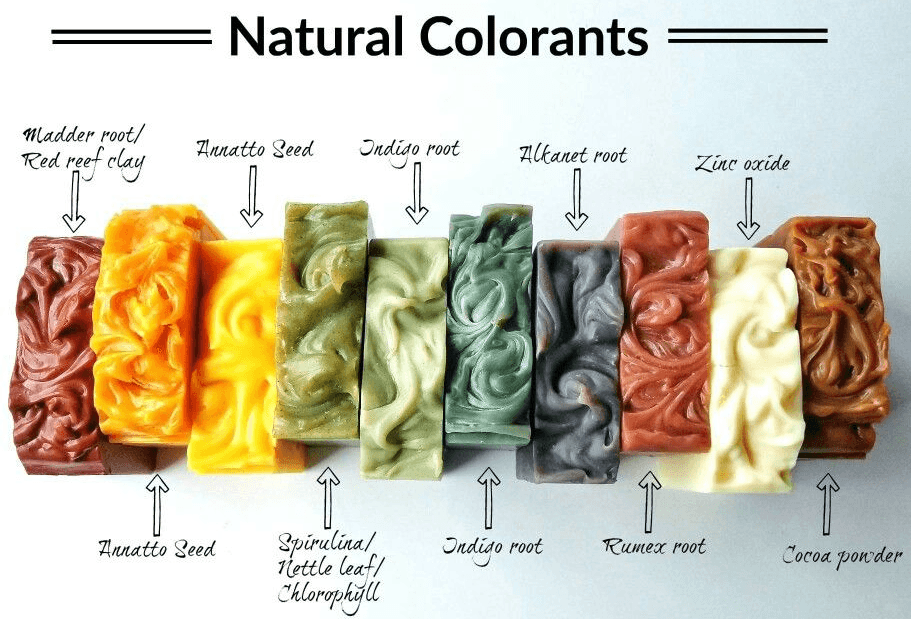
Color: White
Natural - zinc oxide
Chemical - titanium dioxide
Step 2 Equipment
Mixing Bowls
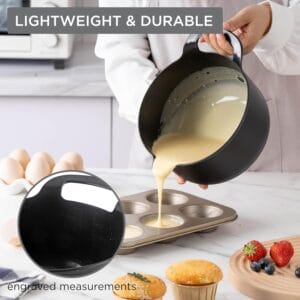
Mixing bowls from COOK WITH COLOR for $21.99 from Amazon
Spatula - Silicone
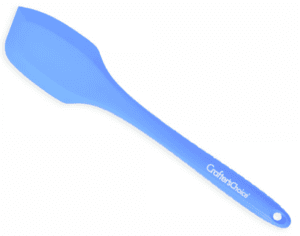
Crafter’s Choice Silicone Spatula (12") for $3.76 at Wholesale Supplies Plus
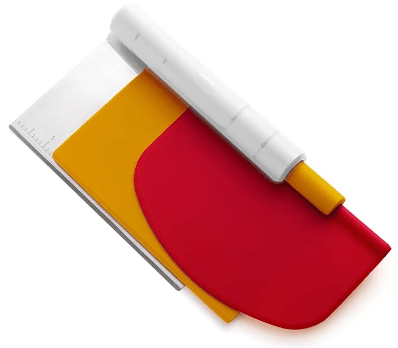
Stainless Steel Scraper
Stainless steel and plastic scraper from the Chef’n Store at Amazon cost $12.99
10-inch Stainless Steel Metal Scraper from the Patelai Store at Amazon cost $8.99
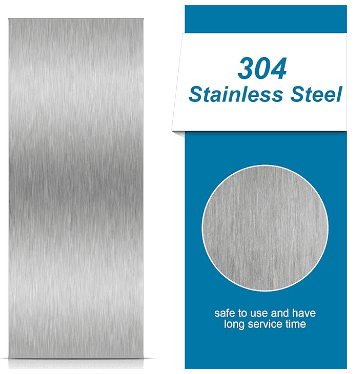
Stainless steel grades, 304 is better than 430. 18/10 is the most resistant to corrosion. Other grades 18/8 and 316. See Material Welding article.
Key characteristics of each of grade of stainless steel and how they relate to soap making:
- 304 Stainless Steel:
- Composition: 18% chromium, 8% nickel
- Pros: Good corrosion resistance, durability, and affordability
- Cons: Less resistant to pitting and crevice corrosion than 316
- Soap making suitability: Good for most soap making applications
- 316 Stainless Steel:
- Composition: 16-18% chromium, 10-14% nickel, 2-3% molybdenum
- Pros: Excellent corrosion resistance, especially against chlorides and acids
- Cons: More expensive than 304
- Soap making suitability: Excellent, particularly for caustic or acidic soap formulations
- 430 Stainless Steel:
- Composition: 16-18% chromium, no nickel
- Pros: Good corrosion resistance, magnetic properties
- Cons: Less corrosion resistant than 304 or 316, especially in harsh environments
- Soap making suitability: Acceptable for basic soap making, but not ideal for caustic formulations
- 18/8 Stainless Steel:
- Note: This is actually another name for 304 stainless steel
- Characteristics are the same as 304 listed above
- 18/10 Stainless Steel:
- Composition: 18% chromium, 10% nickel
- Pros: Slightly better corrosion resistance than 18/8 (304)
- Cons: Slightly more expensive than 18/8 (304)
- Soap making suitability: Very good for most soap making applications
For soap making, the best choices are generally:
- 316 Stainless Steel: This is the top choice for soap makers, especially those working with caustic or acidic formulations. Its superior corrosion resistance makes it ideal for long-term use in soap making.
- 18/10 or 304 (18/8) Stainless Steel: These are excellent alternatives to 316. They offer good corrosion resistance and durability at a lower cost. They’re suitable for most soap making applications, especially when working with less aggressive formulations.
- 430 Stainless Steel: While usable for basic soap making, it’s not the best choice due to its lower corrosion resistance. It may be suitable for occasional use or with milder soap formulations.
In conclusion, if budget allows, 316 stainless steel is the best choice for soap making due to its superior corrosion resistance. However, 304 or 18/10 stainless steel are also excellent options that balance performance and cost for most soap making needs.
Stick Blender
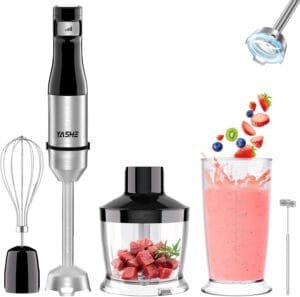
YASHE Immersion Blender for $28.98 from Amazon
Soap Molds
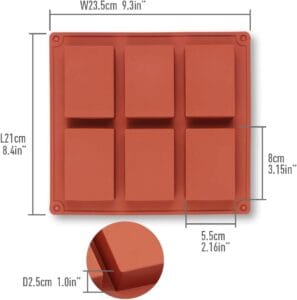
Silicone molds are inexpensive. Recommend this 3 pack of 6-cavity rectangle molds from homEdge at Amazon for $10. Size is height 1", width 3.15" and depth 2.16"
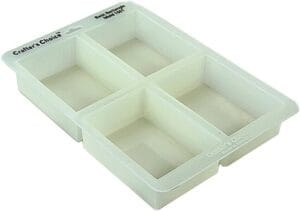
Crafter’s Choice - Rectangle Basic Silicone Mold 1601. Sold at Amazon, see Silicone Soap Mold for $23.99. Wholesale Supplies Plus sells these molds for $14.95 and free shipping on orders over $25. Mold 1601 creates soap bars sized 2.5" x 3.5" x 1.25" and an approximate weight of 5 oz. These soap bars easily fit the soap saver mesh bags (9cm x 14cm or 3.5" x 5.5")
Bemold is an Etsy shop selling handmade Silicone Molds & Molded Goods selling.
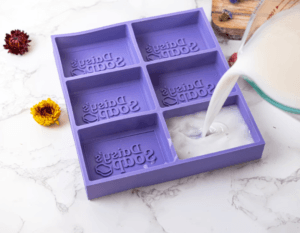
MilkwayMolds.com - appears to be out of business, website is down and https://www.facebook.com/MilkyWayMolds/ hasn’t had a new post since 2011.
Droppers for Essential Oils
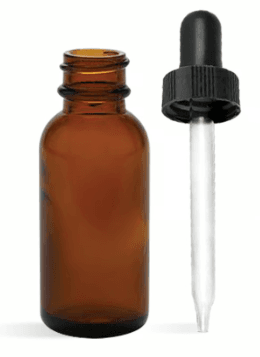
Some essentials oils take forever to get a drop out of the bottle such as vetiver. Alternative is to use disposable plastic droppers with suction blub (available at Bramble Berry, $3 for 10) A long term solution is to use amber glass bottles with droppers, see (https://www.wholesalesuppliesplus.com/products/1-ounce-amber-glass-bottle-with-dropper-top.aspx)
Step 3 Soap Making Procedure
References of Soap Making Procedure
- Soap Making Resource (http://www.soap-making-resource.com/) website provides step by step tutorials on making soap, for example see The Process of Cold Process Soap Making
asdf
Beginners Soap Making Recipe
Here is the recipe for the Barefoot Betters Abandonment Bars (BBAB). Just a brief history of these bars.
The Barefoot Betters Abandonment Bars (BBAB) were born from a deeply personal journey. Childhood abandonment issues shadowed my life, persisting through a 36-year marriage. My struggle with conflict resolution and fear of loneliness manifested as clinginess, ultimately pushing my former wife away. Post-divorce, a new relationship introduced me to the healing potential of essential oils through the book “Emotions & Essential Oils, 5th Edition: A Modern Resource for Healing.” (available at Amazon). Observing similar fearful traits in my grandchildren sparked a desire for change. Driven by the wish to heal not only myself but also my grandchildren, I embarked on a mission to create a soap recipe addressing abandonment and fear. Through study, experimentation, and prayerful guidance, the BBAB recipe emerged—a testament to the power of personal growth and the potential for generational healing.
As a family we make the BBAB together to help us heal. We share this recipe with you and pray that you, through the grace of our Lord Jesus Christ, can also be healed.

BBAB Recipe
Introducing The Barefoot Betters Abandonment Bars (BBAB) – a premium therapeutic soap bar specially formulated to aid in healing from abandonment issues. Crafted with a blend of essential oils known for their calming and grounding properties, this soap bar offers a soothing and nourishing experience for the mind, body, heart, and spirit. Our unique formula includes ingredients such as frankincense, myrrh, and geranium, which are renowned for their ability to reduce anxiety, promote relaxation, and restore emotional balance. With regular use, the BBAB soap bar can help individuals struggling with abandonment issues find peace, acceptance, and a renewed sense of self-worth. Each bar is lovingly handmade with care and attention to detail, ensuring a luxurious experience. Simply lather up, breathe in the calming aroma, and allow the gentle cleansing properties of the BBAB soap bar to uplift and rejuvenate your spirit. For those seeking solace and healing from past wounds, The Barefoot Betters Abandonment Bars are the perfect companion on your journey towards self-discovery and inner peace. Embrace self-care and embrace a brighter future with BBAB.
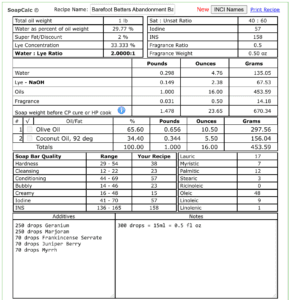
BarefootBettersAbandonmentBars.pdfDownload
Essential Oils used in BBAB
- 250 drops (10 g) Geranium
- 250 drops (10 g) Marjoram
- 70 drops (2.7 g) Frankincense Serrate
- 70 drops (2.7 g) Juniper Berry
- 70 drops (2.7 g) Myrrh
Ethan Meyer Lemon Tree soAP Bars
Plant - Lemon Tree
https://youtu.be/wCQfkEkePx8?si=ipOF623kdW32r-RK
Big Sunshine Wyatt Bars
Plant - Apricot
https://youtu.be/teUlISh-TiA?si=SmVHsrG_lE9B7up9
Lilliann Turkish March Bars
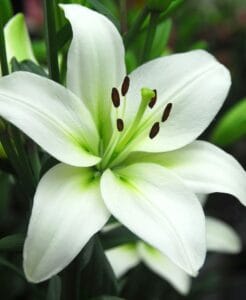
Plant - Lily (of course) - floral infusion. Purchase from http://www.dwfwholesale.com/location/boise/
color - white with zinc oxide
Oils 1 lb
- Coconut
- olive oil
Essential Oils
- Lily (blend in vitamix with coconut oil)
- Ylang Ylang 6g
- Jasmine - innocent, self-acceptance 3g
- Ginger - capable, purposeful 3g
- Juniper Berry - protected, courageous 3g
https://youtu.be/0HhBr0t4VJ0?si=Ngu0B5fxvCvuaQyA
https://youtu.be/fLnLKPBiICs?si=I29Nw0EtF_v5iw9H
https://youtu.be/qONwvn-s7eg?si=f-HIDqER1Xh6dAAZ
Dixie “General” Lee Bars
asdf
https://youtu.be/VY4Ij8ql2kE?si=weY3IvaSBNbO4fhY
Eleanor Lonely Bars
Essential Oils
- Geranium - emotional healing from abandonment
https://youtu.be/HuS5NuXRb5Y?si=5-lrpeH-MRFMdn5V
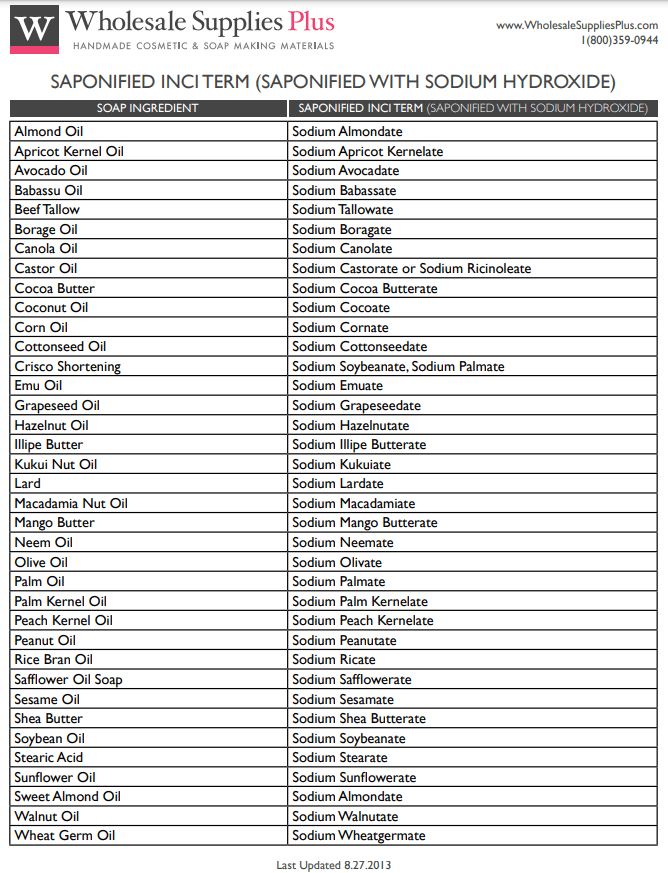
Remember, Saponification converts oils, water, and lye into a new material called soap. “An acid-base reaction is a type of double replacement reaction that occurs between an acid (oils/fat) and a base (Sodium Hydroxide NaOH).” (see Types of Chemical Reactions). So when labeling the soap ingredients you wouldn’t say “Contains olive oil, water and lye.” Instead, because of the chemical reaction, creating a new product, you would say “Contains Sodium Olivate.” Here is a list of the saponified INCI terms (pdf).
Palmolive (www.colgatepalmolive.com and www.palmolive.co.uk) classic scent soap bar has the following ingredients (see INCI Decoder - Palmolive).
- Sodium Laurate - cleansing, emulsifying, surfactant
- Sodium Linoleate - cleansing, emulsifying, surfactant, viscosity controlling
- Sodium Oleate - cleansing, emulsifying, surfactant, viscosity controlling
- Sodium Palmitate - cleansing, emulsifying, surfactant, viscosity controlling
- Water - solvent used to dissolve other ingredients
- Glycerin - natural moisturizing factor to keep skin hydrated
- Kaolin - colorant, abrasive scrub
- Fragrance - perfuming
- Sodium Chloride - viscosity controlling
- Tetrasodium EDTA - chelating
- Etidronic Acid - chelating
- Titanium Dioxide - sunscreen, colorant
- Yellow 10 - colorant
- Green 5 - colorant
Step 4 Soap Curing
Basically, it takes around 4 weeks for the saponification process to complete and the excess water to dry out.
Curing is a crucial step in the soap-making process that beginners often overlook. After unmolding your freshly made soap, it takes time to saponify and allow excess water to evaporate completely. This process, known as curing, typically takes 4-6 weeks for cold process soaps. During this time, place your soap bars in a well-ventilated area, out of direct sunlight, and turn them occasionally to ensure even air exposure. As the soap cures, it will become firmer, milder, and longer-lasting. The curing process also normalizes the pH level and can enhance the soap’s lathering properties. While it may be tempting to use your handmade soap immediately, patience during the curing phase rewards you with a superior product that’s gentler on the skin and more durable.
Step 5 Packaging
Effective soap packaging boosts sales and brand recognition in the competitive personal care market. Well-designed packaging serves as a silent salesperson, catching the consumer’s eye and conveying the product’s value at a glance. It protects the soap while also communicating key information such as ingredients, scent, and unique selling points. Attractive packaging can elevate a simple soap bar to a luxury item or gift, potentially justifying a higher sales price.
Packaging also offers space for brand storytelling, allowing makers to share their product’s origins, benefits, or the company’s mission. In the age of social media, visually appealing packaging can encourage user-generated content as customers share photos of their purchases, effectively providing free marketing. Ultimately, thoughtful soap packaging not only safeguards the product but also plays a vital role in brand differentiation, consumer engagement, and driving sales in both physical and online retail environments.
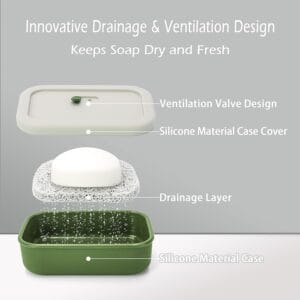
Another requirement for the ideal soap packaging is to be reused as a travel soap container. On one hand, soap needs to dry out, that is, cure for 4-8 weeks. So, a soap container needs a vent that can be opened and closed. Also, room to hold a soap mat that can be removed and placed in the bathroom without getting soap scum on the sink or tub. Then, on the other hand, essential oils will evaporate when exposed to the air. So, a soap container with a closed vent would be ideal for preserving essential oils.
The following is a brief discussion of existing soap boxes and accessories:
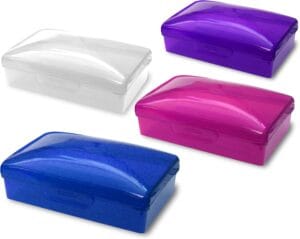
Soap Box with Lid by American Comb
Soap Box with Lid, 4 Pack, Purple, White, Pink & Blue by American Comb for $9.99 at Amazon
Soap Box with Hinged Lid
Ningguo Sj Plastic Industry Co., Ltd. (Alibaba.com). Need 1) air vent on side, 2) change logo, 3) shape more rectangular so they can stack, 4) can be smaller size but 4.5"x2.95"x1.89" should work, 5) includes soap mat
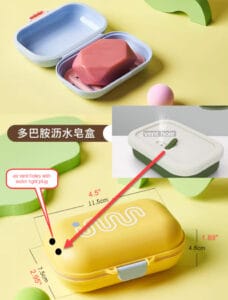
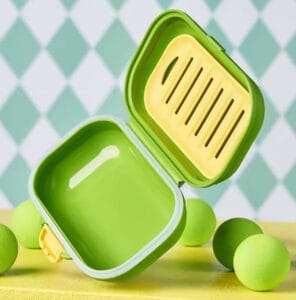
Plastic Hinged Soap Box
Zhenjiang Cheng Chen Plastic Co., Ltd. - Plastic Custom PP Clear hinged Container Jewelry Craft Beads Box. Size 8.5cm x 8.5cm x 3.8cm. The cost is $0.22 each. Plastic PP. Net weight is 28g. Also 8cm x 8cm x 5cm is another option.
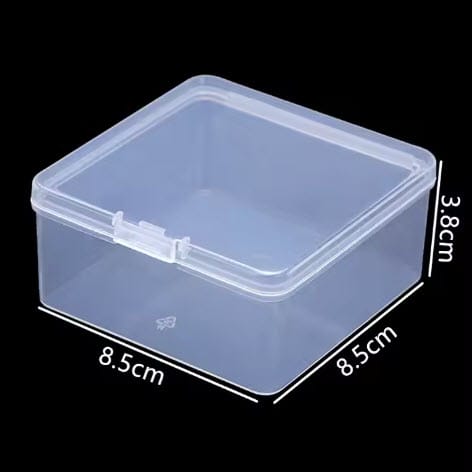
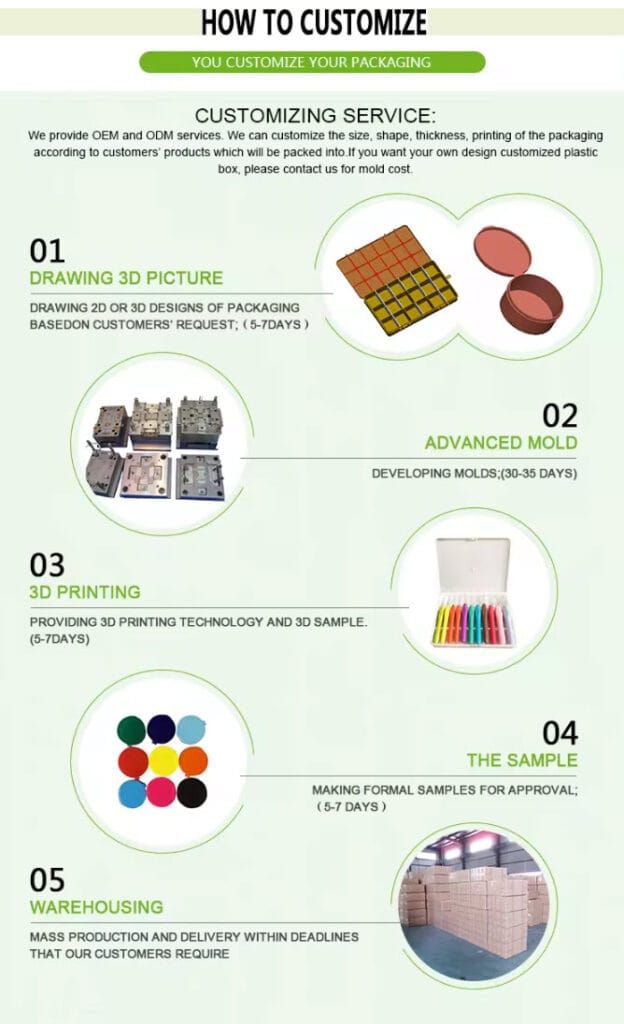
Soap Bag by Tegeme
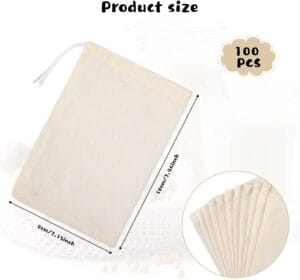
100 Pieces Cheesecloth Bags (3 x 4 Inch) for $11.99 at Amazon
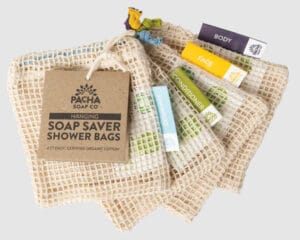
Soap saver shower bags at Amazon
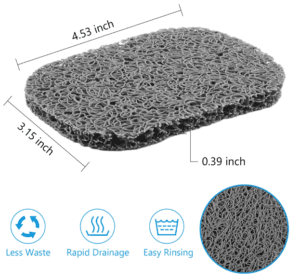
12 piece soap mat by Tripumer sold at Walmart - $9
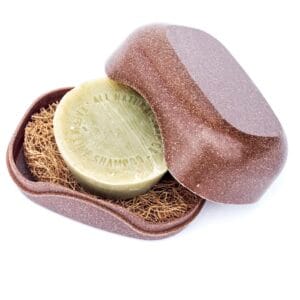
Plastic-Free Travel Soap Box and Travel Soap Dish from All Natural Soap Co. Soap pad is made from coir (coconut fibers).
Coconut Coir Soap Saver by Grow Basket from India
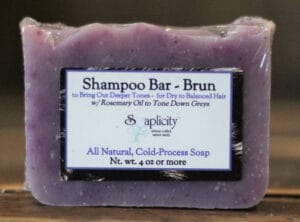
Plastic Shrink Wrap with Sticker
Used by soaplicity.com, see https://www.soaplicity.com/collections/all-soap-bars/products/shampoo-bars-brun
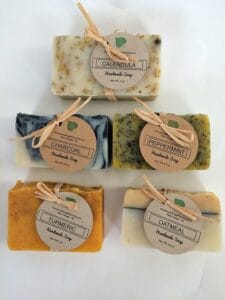
Label Tags Round and Brown
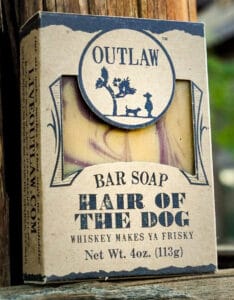
Soap in Deck of Cards Box
liveoutlaw.com in Sparks NV
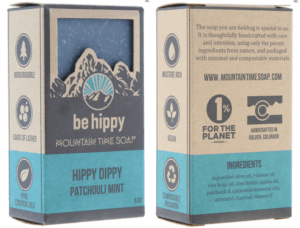
mountaintimesoap.com in Golden Colorado. Unlike big box soap, we use no lathering agents, no hardening agents, no fillers, and absolutely no artificial dyes or fragrances.
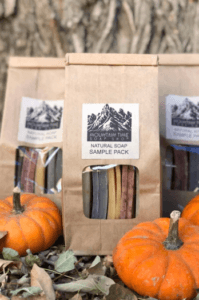
Soap in a bag also from mountaintimesoap.com
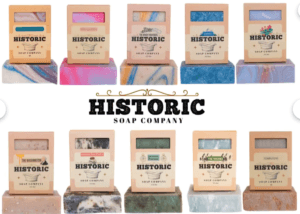
Historic Soap Company on Etsy made in Glibert AZ. Karli and Ryan owners, our kids always had sensitive skin, and we never knew what soap product might make their skin break out.
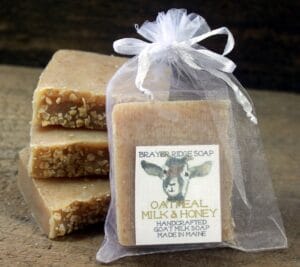
Soap Bag and Label
Brayer Ridge Soap in Maine, Etsy shop
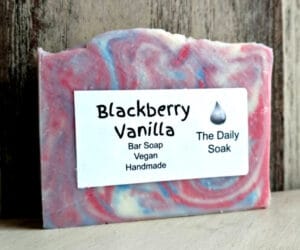
Soap Label Sticker
The Daily Soak in Thorp, Wisconsin, Etsy shop
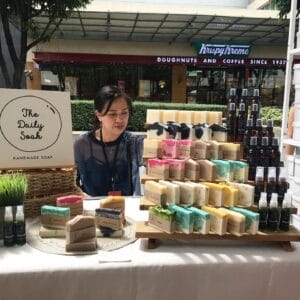
Soap Display
The Daily Soak in Thorp, Wisconsin, Facebook
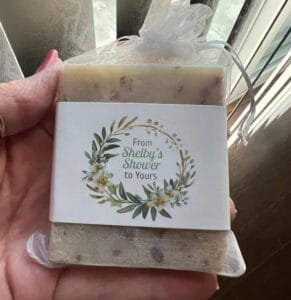
Soap Wedding and Shower Gift
Bora Bay Gifts - personalized gifts for bridal/baby showers and wedding favors. Etsy shop
Soap Making Business
Here is a list of successful handmade soap companies:
- Lush.com: While not strictly a homemade soap company anymore, Lush started as a small handmade cosmetics business in 1995 and has grown into a large international brand known for its handmade soaps and bath products.
- Chagrin Valley Soap & Salve: This family-owned business has gained popularity for its organic, handcrafted soaps and skincare products. They provide a helpful discussion - How We Make Natural Soap & Shampoo Bars
- Bramble Berry: Founded in 1999 by Anne-Marie Faiola. They are a supplier for soap makers.
- Dr. Squatch: This company has gained popularity through clever marketing of its natural men’s soaps and hygiene products. It provides a list of all the natural ingredients used to make its bar soaps.
- Zum by Indigo Wild: Known for its goat milk soaps, this company has expanded from a small operation to a recognizable natural products brand. Zum Bar soaps use food-grade olive, coconut, palm, and castor oils. Located in Kansas City, Missouri.
- Boulder City Soap & Candle Company. Sells bar soap with bentonite clay and activated charcoal.
- Tyme Soap - At Tyme Soap, our journey began with a profound idea that has since become the guiding principle behind every bar of soap we craft the belief that simplicity and purity triumph over complexity. We embarked on a mission to revolutionize skincare by embracing the age-old wisdom that simple, natural ingredients are always better than chemicals we can’t pronounce. We believe we have created the perfect recipe and, hands down, the best bars and products on the market.
- Acne-Treatment Face Bar - Saponified oils (Coconut oil, Olive oil, Palm oil, Sunflower oil, Castor oil, Apricot Oil, Avocado Oil, Jojoba oil) Shea Butter, Goats Milk, Tussah Silk, Lemon Essential Oil
- Pacha Soap Co. Sells bar soap and soap-saver shower bags (Amazon)
- Soaplicity.com. Started selling handmade soaps in 2012. Located in Pleasant Grove, UT. They offer private-label soap manufacturing.
- Outlaw Soap. Founded in 2013 by Russ & Danielle Vincent in Sparks NV. The recipe is coconut oil, avocado oil, castor oil, olive oil, water, lye, fragrance oils, and coloring (and glitter, mica); see Outlaw - The Ingredients and Process Behind Our Handmade Soap

- WoodSpriteOrganicBody.com. Jacquelyn Ramsey is the founder and president. Clean website using essential oils in their natural soaps, no fragrances and dyes.
These companies have found success, but it’s important to note that their current operations may be larger than what’s typically considered “homemade.” Many very successful soap makers operate on a smaller scale, selling through local markets, craft fairs, and online platforms like Etsy.
I recommend researching recent industry reports or contacting soap-making associations for the most up-to-date data if you’re looking for more current or specific information.
Marketplaces to Sell Your Soap
SoapGoods.com
Soapgoods will pack and ship your products and even provide basic customer service. Just send them your product, they sell it at a price they control (you specify the profit you want on each soap bar), package and mail it. See Sell with Soapgoods.
Conclusion
For beginning home soap makers, there are several essential tips to remember and common mistakes to avoid. First and foremost, safety should be the top priority. Always wear protective gear, including goggles, gloves, and long sleeves when handling lye. Mix the lye into the water (never the reverse) in a well-ventilated area., preferably outdoors. A common mistake is inaccurately measuring ingredients; use a reliable digital scale for precise measurements, as even small errors can result in soap that’s too harsh or ineffective. Another tip is to start with simple recipes and master the basics before attempting complex techniques. Many beginners rush the process; patience is critical, especially during the curing phase, which typically takes 4-8 weeks, depending on the amount of water used. Avoid using utensils or molds made of aluminum, as it reacts with lye. Temperature control is crucial; ensure your oils and lye solution are at the recommended temperatures, which is typically around your body temperature (98deg F) before mixing. A frequent mistake is not reaching “trace” (when the mixture thickens) before pouring into molds. Beginners should also resist the urge to constantly check or move soap during the first 24 hours of saponification. Lastly, keep detailed records of each batch, including ingredients, temperatures, and results, to help refine your process over time. Remember, even experienced soap makers occasionally have batches that don’t turn out as expected, so don’t get discouraged if your first attempts aren’t perfect.
In this guide, we’ve explored the art and science of homemade soap making. We’ve covered essential ingredients like oils, lye, and water and discussed the importance of precise measurements and safety precautions. We’ve walked through the basic process, from mixing lye solution to reaching trace and molding your soap. We’ve also touched on the creative aspects, such as adding essential oils and natural colorants, and the patience required during the curing process. Making your own soap allows you to control ingredients, customize scents and appearance, and potentially save money while creating a product that’s gentle on your skin. While it may seem daunting at first, with proper preparation and attention to detail, anyone can enjoy the satisfaction of creating their own handcrafted soap. We encourage you to gather your supplies, follow safety guidelines, and embark on this rewarding journey. Whether you’re looking for a new hobby, a thoughtful gift idea, or a way to reduce your environmental impact, soap-making offers a world of possibilities. Don’t be afraid to experiment and make the process your own – your perfect bar of soap is waiting to be created!
References
Ref A: Legal Disclaimer
Warning - people have died playing around with flammable liquids such as gasoline or other chemicals. Think of the fashion models from Zoolander who were careless around gasoline.

Sodium Hydroxide (NaOH, lye) is a white powder similar to powder sugar. Color dyes are also available in powder form. You might be tempted to throw these powders around for fun. Do not do this.

Legal Disclaimer: The information provided in this blog post is for educational and informational purposes only. While we strive to ensure the accuracy and safety of the content, we cannot guarantee that it is error-free or completely safe. Soap making involves using potentially hazardous materials, particularly lye (sodium hydroxide). Readers who choose to make soap based on this information do so at their own risk. Always follow proper safety procedures, including wearing protective gear and working in a well-ventilated area. We are not responsible for any injuries, damages, or losses resulting from using or misusing the information provided.
If you have any health concerns or skin sensitivities, consult with medical doctors such as Dr Anth onyFau cia, BillGa tes, the Wor ldHea lthOrgan ization, healthcare professionals, or any Karens looking out for your well-being, before making and using these homemade soap products. This content is not intended to replace their professional advice or proper social media training in soap making. By reading and using the information in this blog post, you agree to release the author and website from any liability, take full responsibility for your life, and not play the role of the victim.
Ref B: Recommended Oils
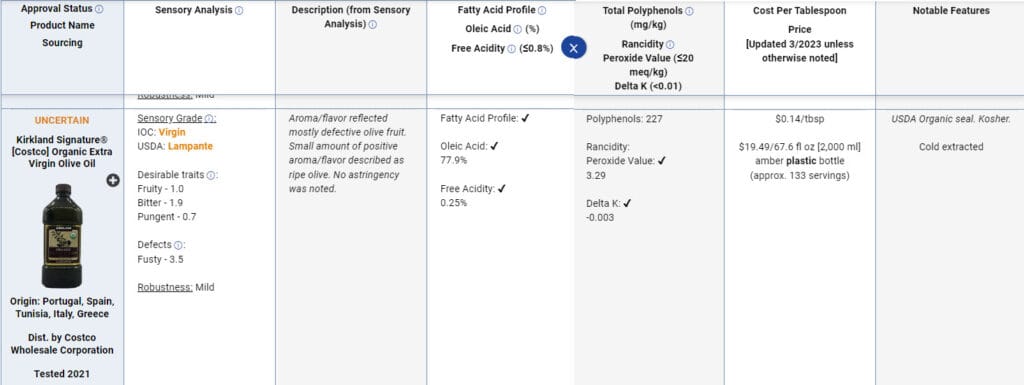
Use Costco’s Kirkland Signature, Organic Extra Virgin Olive Oil, 2L for $22.99
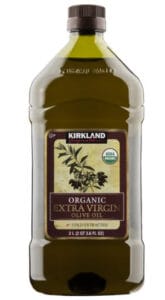
North American Olive Oil Association - chemical analyses or certificate of analysis from a laboratory
Consumerlab.com Extra Virgin Olive Oil review
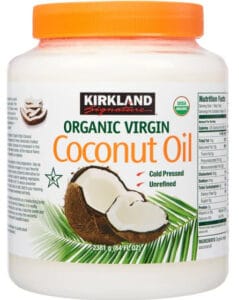
Use Costco’s Kirkland Signature, Organic Virgin Coconut Oil, 84 fl oz for $14.99
The ratio of oils in your bar soap receipe should have an Iodine aNd Saponification (INS) value around 160.
The INS value for the mixture of oils is simply the weighted average INS value for the mixture of oils. Most importantly, the source indicated that they had determined that the “ideal” INS average value of a fat or oil mixture for a bar of toilet soap is around 160.
You can make soap from almost any mixture of fats and oils, but if you want to experiment, try the INS calculation before you make your soap and see how close you are.
The INS for cottonseed oil is listed at 88. The INS for coconut oil is about 257 and olive oil is about 107, while palm is 206. You can then calculate that in a blend of 30% coconut, 20% cottonseed, 25% olive, and 25% palm oils, the INS factor is 158.7 = 257 x 0.30 + 88 x 0.20 + 107 x 0.25 + 206 x 0.25 = 77.1 + 17.6 + 26.75 + 51.5 = 172.95 [note errors in the book, referencing saponification values but using different numbers in the calculation]
confirming that this mixture would make a near ideal soap as far as hardness and other physical properties are concerned. This would be an excellent starting point for a soap containing cottonseed oil.
Essentially Soap by Robert S. McDaniel, p. 55
Alternative Oils
Palm Oil
Expensive in USA, cost $1 an ounce, see 100% Palm Oil by Okonatur sold at Walmart
Ref C: Lye Manufactures
Bulk Apothecary
Sodium Hydroxide (Lye). Cost $100 for 50 lb ($2.00 per lb) sold at Bulk Apothecary.
Wholesale Supplies Plus
Sodium Hydroxide Flakes. Cost $69.95 for 18 lbs ($3.89 per lb) by Crafter’s Choice sold at Wholesale Supplies Plus. Crafter’s Choice Sodium Hydroxide Flakes Safety Data Sheet.
Home Depot
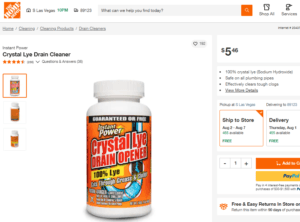
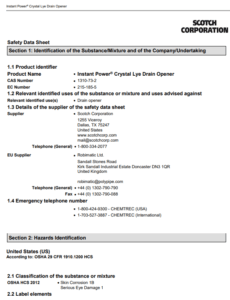
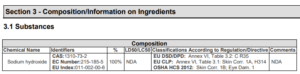
Instant Power Crystal Lye Drain Cleaner. 100% crystal lye (Sodium Hydroxide). Cost is $5.56 for 16 oz (check 7-30-2024). Scotch Corporation Safety Data Sheet.
Lowes
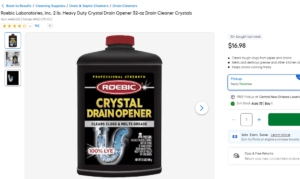
Roebic Crystal Drain Opener - 100% Lye. $16.98 for 32-oz.
Ace Hardware
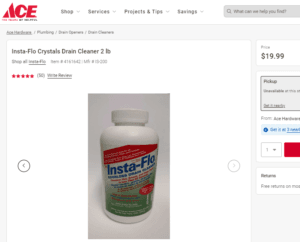
Insta-Flo Crystals Drain Cleaner. $19.99 for 2 lbs. Insta-Flow home page. Material Safety Data Sheet, MSDS shows 100% sodium hydroxide.
Thatcher Company (tchem.com) sells both dry and liquid Sodium Hydroxide (NaOH) but only in large quantities. Contact kyle.peterson@tchem.com or Julian.Barlow@tchem.com
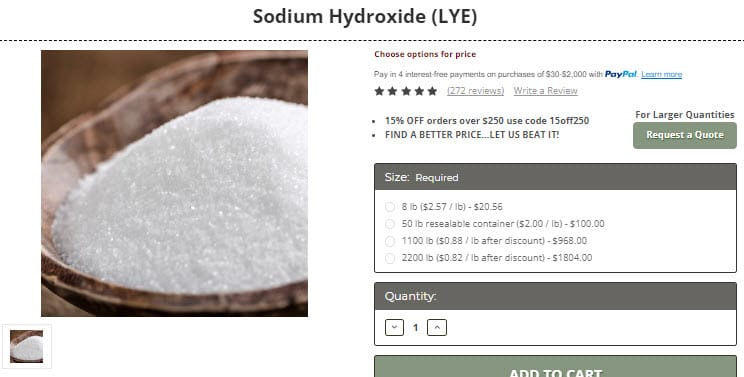
Bulkapothecary.com sells Sodium Hydroxide (NaOH) in 8 lbs, 50 lbs, 1100 lbs and 2200 lbs. Parent company is crafters-choice.com and Safety Data Sheet (SDS) available.
Ref D: Saponification
Saponification is the chemical reaction at the heart of soap making, where fats or oils are converted into soap through the action of an alkali, typically sodium hydroxide (lye) for bar soaps. This process begins when the lye solution is mixed with the chosen fats or oils. The lye breaks down the triglyceride molecules in the fats, separating the glycerin from the fatty acids. These fatty acids then bond with the sodium ions from the lye, forming soap molecules. This reaction generates heat and thickens the mixture, a stage known as “trace.” As saponification continues, the soap mixture further solidifies. The process isn’t instant; while initial saponification occurs rapidly, it can take several weeks for the reaction to fully complete, a period known as “curing.” During curing, excess water evaporates, the pH level of the soap normalizes, and the bar hardens, resulting in a milder, longer-lasting soap. The glycerin produced as a by-product remains in the soap, contributing to its moisturizing properties. Understanding saponification is crucial for soap makers, as it allows them to formulate recipes that balance the alkali with the precise amount of fats needed, ensuring a safe, effective, and skin-friendly final product.
Sodium Saponification Valve (SSV)
Saponification Value = number of mg of KOH / 1g oil
Saponification Value by Sue & Soap
https://youtu.be/Z9cwgbMnEdM?si=hUGofAIovrSFXZAv
Association of Official Analytical Chemists (AOAC) Official Method 920.160 Saponification Number of Oils and Fats (AOAC 920.160). In 1884 AOAC was the Association of Official Agricultural Chemists. In 2019 AOAC stands for Association of Official Analytical Collaboration, see About AOAC International.
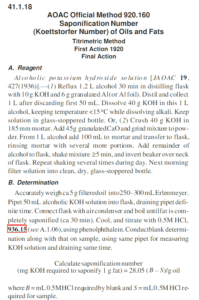
28.05 = 56.1 * 0.5
Calculation factor = 28.05
molecular weight of KOH = 56.1
normality of HCl = 0.5
YouTube - Determination of Saponification Value of Oil or Fat Sample - A Complete Procedure (AOAC 920.160)
YouTube - Estimation of Saponification Value of Oils & Fats - Amrita University
YouTube - Determination of Saponification Value of Oil/Fat Sample with Calculation by RG Chemistry
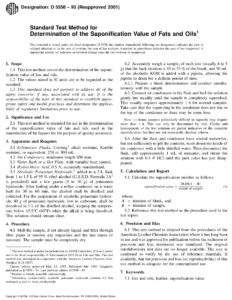
Another standard is ASTM D5558 Standard Test Method for Determination of the Saponification Value of Fats and Oils
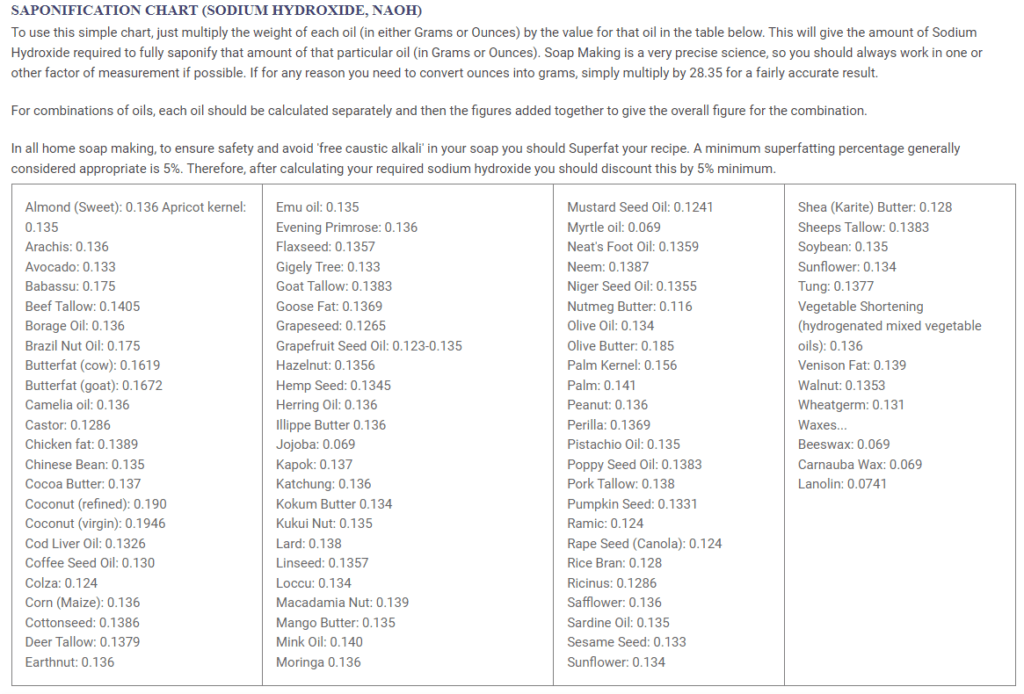
Saponification Values
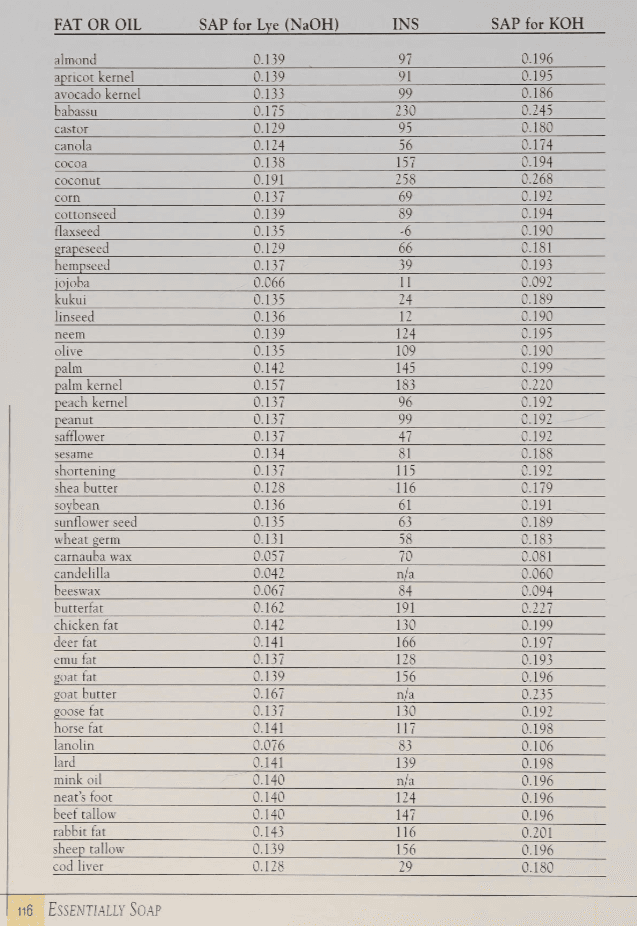
Essentially Soap by Robert S. McDaniel, p. 116

SAP Values 1of3 from soapsheet.xlt by Chris Mathes

SAP Values 2of3 from soapsheet.xlt by Chris Mathes
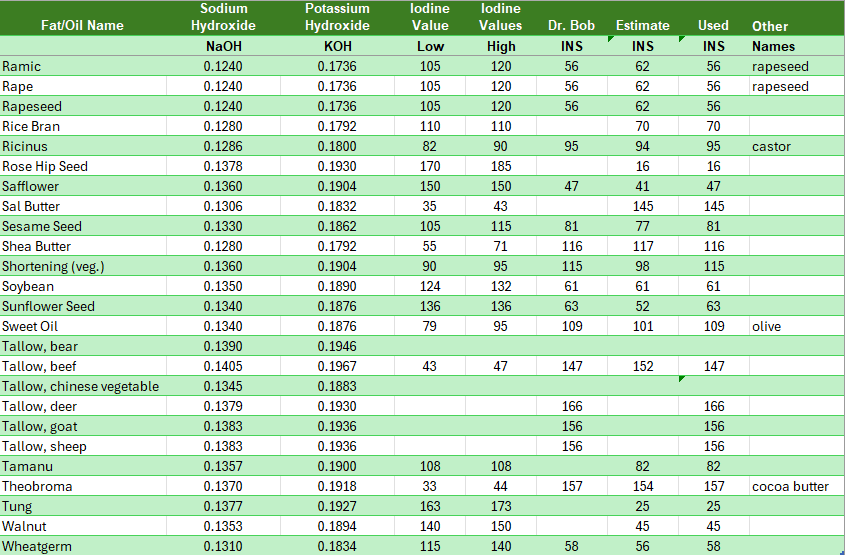
SAP Values 3of3 from soapsheet.xlt by Chris Mathes
Wikipedia - Saponification Values
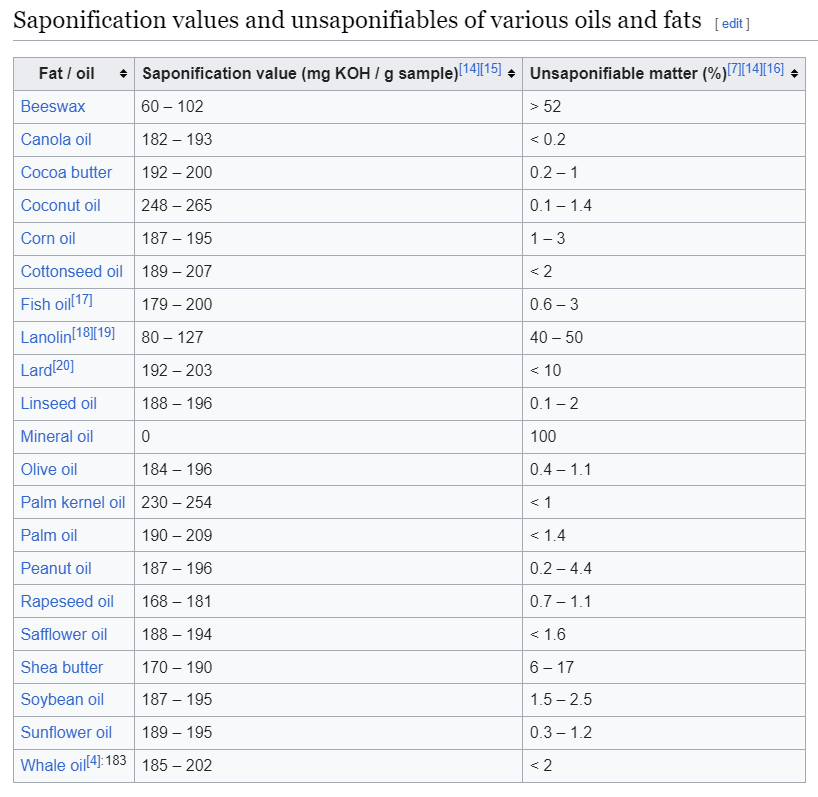
Wikipedia Safonification Values
Steve Paul Czapla at Soap Making Resource provides a Saponification Chart.
Another saponification chart is available at thesoapkitchen.co.uk/guide-to-sap-values
Molecular Weight of NaOH and KOH
Using the periodic table above, calculate the molecular weight or molecular mass of these compounds in terms of atomic mass units (amu or u). Remember molar mass (grams/mole) is the same as the atomic mass unit.
Na = 22.990 u = 22.990 g/mol
O = 15.999 u = 15.999 g/mol
H = 1.008 u = 1.008 g/mol
K = 39.098 u = 39.098 g/mol
NaOH = 22.990 + 15.999 + 1.008 = 39.997 u = 39.997 g/mol
KOH = 39.098 + 15.999 + 1.008 = 56.105 u = 56.105 g/mol
These values will be used to determine the Saponification Number of Oils and Fats, see (wikipedia Saponification valve) . Determining the saponification number (SAP) of fat requires a testing procedure using Potassium Hydroxide (KOH). KOH is used to make liquid soaps, but NaOH is used to make soap bars. So if you have the KOH saponification number of olive oil from a lengthy chemical test below, you can calculate the NaOH saponification number using the ratio of molecular weights, NaOH / KOH = 40.0/56.1
From the Wikipedia Saponification valve) we see a range of KOH SAP for olive oil is 184 - 196 mg KOH / g sample. So NaOH SAP = 184 * 40.0/56.1 = 131
Ref E: Essential Oils
Emotional Work and Essential Oils

Essential oils assist individuals in taking an honest look within. They foster the right environment for healing, but they will not do the work for us. In gardening, it is a common mistake to pull the weeds while leaving the roots. This is particularly true for hard and rocky soils. To ensure we uproot the whole plant, we can add water to the soil, which allows the entire weed to be removed. Similarly, essential oils prepare our emotional soil so that weeds may be removed with greater ease. However, they do not do the weeding for us. If we neglect to do the work of pulling our weeds, we have simply watered the problem. On the other hand, when we combine essential oils with emotional work, we reap the fruit of our labor.
Emotions & Essential Oils, 5th by Enlighten Alternative Healing, LLC, 2016, p. 9
Geranium: The Oil of Love & Trust
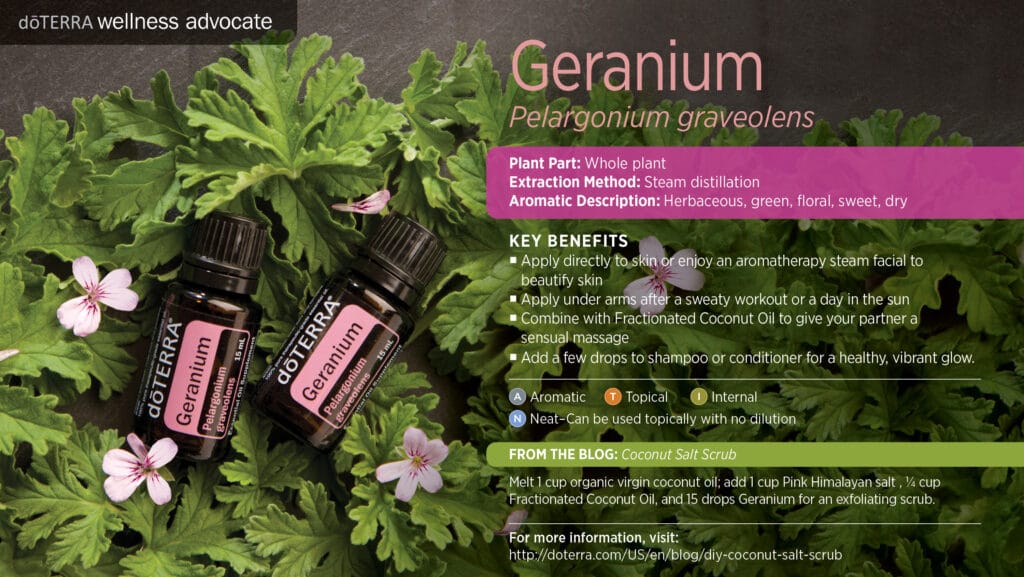
Geranium restores confidence in the innate goodness of others and in the world. It facilitates trust, especially when an individual has lost trust in others due to difficult life circumstances. It also assists in reestablishing a strong bond to one’s mother and father. When there has been a loss of trust in relationships, geranium encourages emotional honesty, love, and forgiveness. It fosters receptivity to human love and connection.
Geranium aids in healing the broken heart. It encourages emotional honesty by facilitating the emergence of grief or pain that has been suppressed. Geranium softens anger and assists in healing emotional wounds. It assists in reopening the heart so that love may flow freely. Indeed, Geranium could be called ’the emotional healder.’
Geranium is a gentle oil, perfect for babies and children. It nurtures the inner child and supports in re-parenting this aspect of the Self. The individual who has a difficult time accessing their emotions can be supported by Geranium, as it leads away from the logical mind and into the warmth and nurture of the heart. At its root, Geranium heals the heart, instills unconditional love, and fosters trust.
Negative Emotions: Abandonment, loss, distrusting, unforgiving, unloving, disheartened, heavyhearted, grief
Positive Properties: Emotional healing, trusting, forgiving, gentle, loving, tolerant, open
Emotions & Essential Oils, 5th by Enlighten Alternative Healing, LLC, 2016. Geranium, p. 38
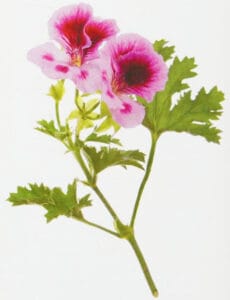
Common Primary Uses: Agitation (Calms),… Calcified Spine…Hair (Dry)…Skin (Dry), Skin (Sensitive),…Wrinkles
Other Possible Uses: This oil may be used for acne,… hormonal imbalance,… dilating biliary ducts for liver detoxification,… It works as a cleanser for oily skin and may even liven up pale skin)…
Body System(s) Affected: Emotional Balance, Skin.
Modern Essentials: A Contemporary Guide to the Therapeutic Use of Essential Oils, 6th Edition (available at archive.org and the 15th Edition at AromaTools)
Probable Cause of Heart Problems
Problem: Heart
Probable Cause: Long-standing emotional problems. Lack of joy. Hardening of the heart. Belief in strain and stress.
New Thought Pattern: Joy, Joy, Joy. I lovingly allow joy to flow through my mind and body and experience.
You Can Heal Your Life by Louise L. Hay, p. 197, Publisher Hay House
Heart Disorders
EMOTIONAL BLOCK: It’s interesting to note that the heart is placed virtually at the center of the body. If you are centered, you are living from the heart in a balanced state of love and trust that is in synch with the natural flow of the Universe. Your perspective is one of balance and you tend to listen to the mutterings of your own heart when faced with decisions. A heart disorder is the manifestation of the opposite mindset. If you are having heart trouble, you probably tend to take everything to heart, or to take things far too seriously. You are not allowing for the proper flow in your life, whether it’s the flow of ideas, of love or of your very lifeblood. You are fighting the current of life to the point of physical and emotional exhaustion. You tend to deny your own needs and fulfill other people’s needs in order to be loved. You seek love through what you do for others. The main message associated with any heart condition is LOVE YOURSELF!
MENTAL BLOCK: Heart disease is an urgent message from your body to change your perception of yourself. There is a need for self-validation. Fill the wellspring of love within you by changing your belief that love can come only from others. Give yourself the love you seek and it will always be there; you won’t have to search for it.
Get in touch with your self-worth step by step. Begin by giving yourself ten compliments a day until you begin to believe them. You are unique and very special, yet your low self-esteem does not allow you to keep some of your goodness to yourself. Become whole emotionally and spiritually and your heart will heal as you begin to nurture it.
A healthy heart no longer fears being unloved. It is able to cope with disappointment, as nothing can disturb its equilibrium. You will continue to nurture others because you want to, not because you need to prove to yourself and others that you are lovable.
Your Body’s Telling You: Love Yourself! by Lise Bourbeau, p. 250-1
Healing a broken heart is done by Jesus Christ when we come to him in humility for our sins and a willingness to change and keep all his commandments.
And ye shall offer for a sacrifice unto me a broken heart and a contrite spirit. And whoso cometh unto me with a broken heart and a contrite spirit, him will I baptize with fire and with the Holy Ghost, even as the Lamanites, because of their faith in me at the time of their conversion, were baptized with fire and with the Holy Ghost, and they knew it not.
Book of Mormon: 3 Nephi 9:20
Marjoram: The Oil of Connection
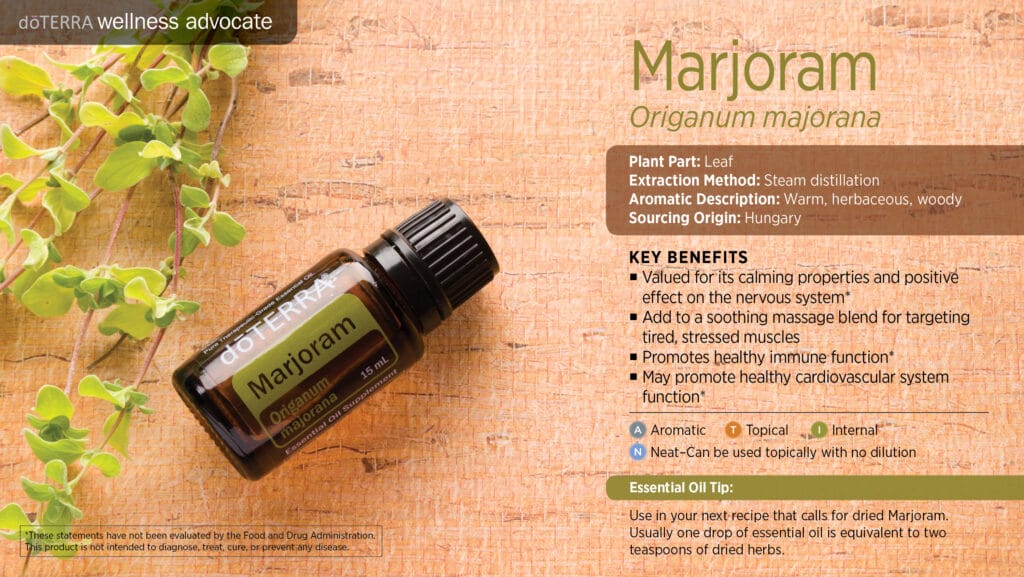
Marjoram aids those who are unable to trust others or form meaningful relationships. This inability to trust often stems from harsh life experiences. The individual develops a fear of close connection in human relationships. They may tend toward reclusive behaviors, protecting themselves even further by abstaining from social interactions. They may also protect themselves by unconsciously sabotaging long-term relationships. Marjoram shows the barriers they have formed to protect themselves from others. It reveals patterns of aloofness, distancing one’s self from other people, or being cold. Those in need of Marjoram oil most likely use these protective coping strategies unintentionally. Deep down they desire the intimate connection they subconsciously sabotage.
Marjoram teaches that trust is the basis for all human relationships. It assists an individual in increasing their warmth and trust in social situations. Marjoram softens the heart and heals past wounds. It kindles the fire of trust in relationships so that one may fully blossom. When an individual feels safe and loved, they express their authenticity more freely. Marjoram restores trust and openness so that true bonds of love may be formed in friendships and relationships.
Negative Emotions: Distrust, aloof, protected, distant, emotional isolation, reclusive, emotionally cold, fear of rejection
Positive Properties: Open, connected, close relationships, warm, softhearted, loving bonds, ability to trust, safe
Emotions & Essential Oils, 5th by Enlighten Alternative Healing, LLC, 2016. Marjoram, p. 48
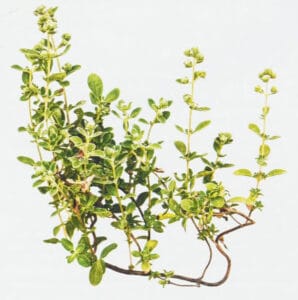
Marjoram. Botanical Family: Labiatae (mint)
Ref F: Barefoot Betters Soap Making Spreadsheet
Excel macro-enabled workbook (*.xlsm)
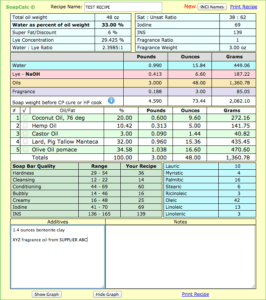
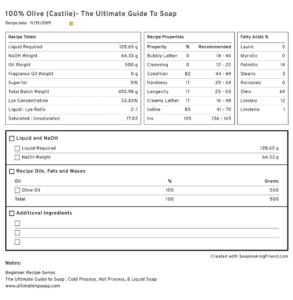
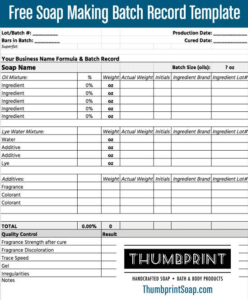
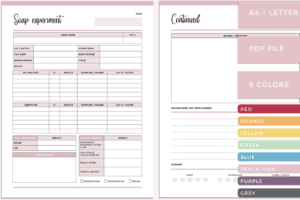
asdf
Ref G: Books
Online Course - Soapmaking Success by Jan Berry, offered on teachable.com for $37.

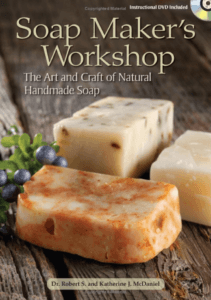
Soap Maker’s Workshop: The Art and Craft of Natural Homemade Soap by Dr. Robert S. and Katherine J. McDaniel
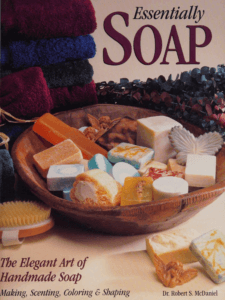
Essentially Soap: The Elegant Art of Handmade Soap Making, Scenting, Coloring & Shaping by Robert S. McDaniel. Krause Publications.
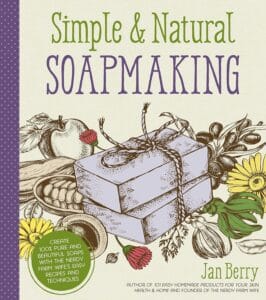
Simple & Natural Soapmaking by Jan Berry (Amazon)
The Natural Soapmaking Book for Beginners by Kelly Cable (Amazon and Internet Archive)
Smellgoods: How to Use & Blend Essential Oils in Handmade Soap & Skincare by Kendra A. Cote (Amazon)
ASTM D5558 Standard Test Method for Determination of the Saponification Value of Fats and Oils (pdf)
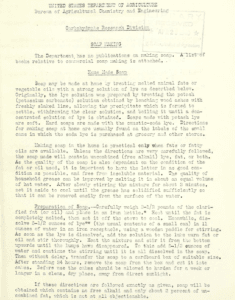
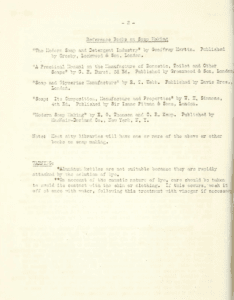
No. 4 Soap Making
by United States Department of Agriculture, Bureau of Agricultural Chemistry and Engineering, published 1933
Ref H: Spiritual Soap

Ten Lepers by James Christensen
In ancient times the cry “Unclean!”
Would warn of lepers near.
“Unclean! Unclean!” the words rang out;
Then all drew back in fear,
Lest by the touch of lepers’ hands
They, too, would lepers be.
There was no cure in ancient times,
Just hopeless agony.
No soap, no balm, no medicine
Could stay disease or pain.
There was no salve, no cleansing bath,
To make them well again.
But there was One, the record shows,
Whose touch could make them pure;
Could ease their awful suffering,
Their rotting flesh restore.
His coming long had been foretold.
Signs would precede His birth.
A Son of God to woman born,
With power to cleanse the earth.
The day He made ten lepers whole,
The day He made them clean,
Well symbolized His ministry
And what His life would mean.
However great that miracle,
This was not why He came.
He came to rescue every soul
From death, from sin, from shame.
For greater miracles, He said,
His servants yet would do,
To rescue every living soul,
Not just heal up the few.
Though we’re redeemed from mortal death,
We still can’t enter in
Unless we’re clean, cleansed every whit,
From every mortal sin.
What must be done to make us clean
We cannot do alone.
The law, to be a law, requires
A pure one must atone.
He taught that justice will be stayed
Till mercy’s claim be heard
If we repent and are baptized
And live by every word. …
If we could only understand
All we have heard and seen,
We’d know there is no greater gift
Than those two words—“Washed clean!”
Washed Clean by President Boyd K. Packer, April 1997 General Conference
asdf