This is the drink for the middle of a training day. Before you train, the pre-workout collagen shooter gets you ready. At bedtime, the evening recovery drink helps you wind down and repair overnight. This one fills the gap right after the workout: you’ve used up fuel, sweated out salt and water, and put a load on your muscles. The glass has three jobs: rebuild, refuel, rehydrate.
It’s also built for a specific gut. If you eat for Carolyn Mein’s Intestinal body type, a lot of standard recovery advice works against you. A sports drink full of dyes. A raw-kale-and-almond smoothie. A pile of supplements. This version keeps the ingredient list short, uses foods that sit well with this type, and leans on the type’s anchor foods, the ones that stay top-tier even on a stressed-gut day.
We already have a maximalist post-workout drink, Bare One K, with thirty-some ingredients and about 2,400 mg of potassium. That one is the weekend project. This is the everyday one: nine core ingredients, most of them straight from the freezer, five minutes, and easy to repeat.
The recipe (one serving)
Post-Workout Recovery Drink for the Intestinal Body Type
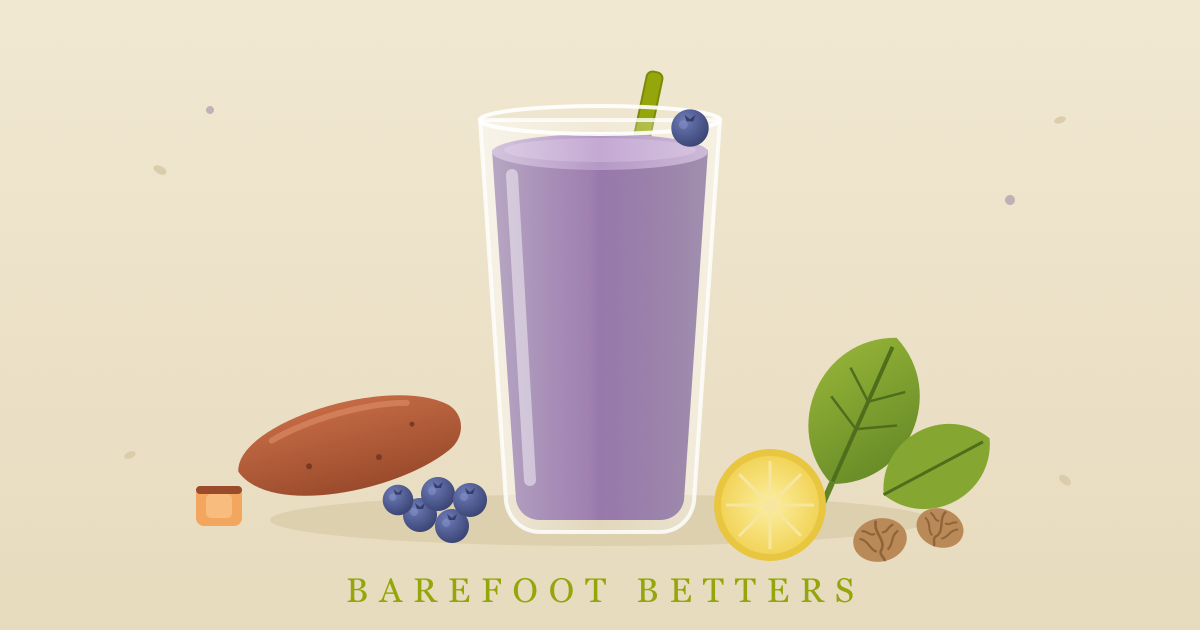
A blended post-workout drink built on the Intestinal type's anchor foods: coconut water, water, and sea salt for electrolytes, hemp protein to rebuild, pineapple and blueberries to refuel, plus frozen spinach, walnuts, and lemon juice, with bromelain and papain on the side.
Ingredients
Equipment
- Blender
Method
- Pour the coconut water and water into the blender first, so the blades catch.
- Add the hemp protein, pineapple, blueberries, spinach, walnuts, lemon juice, salt, and the cream of tartar if you’re using it, plus any of the optional add-ins.
- Add the ice and blend , until completely smooth and no walnut or hemp grit is left.
- Taste it. More lemon juice if it’s flat, a little more salt if you sweated hard, a little sorghum if you want it sweeter, a splash of water if it’s too thick.
- Drink it within an hour or so of training, with the bromelain and papain, then go for a short, easy walk if you can.
Nutrition
Notes
- No prep day needed. The pineapple, blueberries, and spinach all come straight out of the freezer, so after training it’s a 2-minute blend.
- Prebiotic on the side: if you use one, take 2 capsules of a short-chain FOS prebiotic with the glass rather than blending them in. It feeds the good bacteria, and pairs well with a probiotic if you take one.
- Stressed-gut day? Leave out the blueberries and use a full cup of pineapple, keep the spinach cooked, use the smaller pour of coconut water, and skip the optional add-ins. Keep the enzymes.
- Potassium adds up fast here (roughly 1,500–1,750 mg with the cream of tartar). If you have kidney disease, or take a potassium-sparing diuretic, an ACE inhibitor, or an ARB, leave out the cream of tartar.
- Approximate nutrition with 1 cup coconut water and no add-ins: about 330 calories, 15–20 g protein (it depends on your hemp label), 50 g carbohydrate, and about 15 g fiber.
Where it lands on the Intestinal food lists
Most of the glass maps straight onto Mein’s lists, and three of the foods are anchors: cooked spinach, walnuts, and sorghum. All three stay “Frequently” on both the Healthy and Sensitive lists.
Built on the type’s anchor foods — 3 that stay top-tier even under stress (4 top-tier in all) — with no “Rarely” foods.
- Pineapples (fresh) Moderately holds under stress
- Spinach (cooked) Frequently anchor
- Walnuts (black, English) Frequently anchor
- Blueberries Frequently
- Lemon juice Moderately holds under stress
- Sea salt Moderately holds under stress
- Sorghum Frequently anchor
Scored against Carolyn Mein’s Intestinal Profile. Look up any food in the Healthy vs. Sensitive food search.
A few details the card can’t show:
- Pineapple is “Moderately” on both lists, so it holds steady on a hard week. Dried pineapple is even better: it’s a top-tier anchor, and two tablespoons blended in can stand in for some of the frozen.
- Blueberries are a “Frequently” fruit on a good day, but they drop to “Rarely” on the Sensitive list. When your gut is having a hard week, leave them out and use a full cup of pineapple.
- Frozen chopped spinach counts as cooked. Raw spinach drops to “Rarely” under stress, and cooked spinach is an anchor. Frozen chopped spinach is blanched before it’s frozen, so it counts as cooked, and it goes in straight from the bag.
- Coconut water isn’t on Mein’s lists. The nearest entries are coconut (“Moderately” on Healthy, “Rarely” on Sensitive) and pineapple-coconut juice (“Moderately” on both), so treat it as a “Moderately” food. That’s why the glass also takes plain water, and why the sensitive-day version uses the smaller pour.
- Hemp protein, bromelain, papain, cream of tartar, creatine, collagen, L-glutamine, and the prebiotic aren’t on the 1997 food lists, so the card leaves them out.
Why these ingredients
Protein, to rebuild. Training breaks muscle down, and you rebuild it from protein. We use Trader Joe’s hemp protein powder: ground hemp seed with most of the oil pressed out, dairy-free, and easy to find. Hemp has all nine essential amino acids (it runs a little low in lysine) and comes with a lot of fiber and some omega-3 fat. The trade-off is that it’s less concentrated than an isolate, so a 4-tablespoon serving gives you less protein than a scoop of whey or pea, and the counts we found for it vary. Read your tub’s label. Collagen is good for connective tissue, but it’s an incomplete protein: it has no tryptophan and not much leucine, the amino acid that switches on muscle repair. So use it on top of the hemp, not instead of it. Hemp alone won’t reach Azadi’s 30 g floor (more on him below); add the collagen scoop, a bigger serving of hemp, or both to get there.
Carbs, to refuel. Most recovery smoothies get their body from banana and avocado. We use coconut water instead, which is lighter and better for hydration, but that takes out most of the carbs. Frozen pineapple and blueberries put them back, and the frozen fruit makes the glass cold and thick without much ice. The hemp powder adds a little more. Altogether the glass comes to about 50 g of carbohydrate, a reasonable refueling amount after a real session.
Enzymes, to digest it. Bromelain comes from pineapple and papain from papaya, and both are proteases: enzymes that break protein down. Taken with a protein drink, they give your stomach a head start on it, which is the point on a sensitive gut. Frozen pineapple keeps its bromelain (heat destroys it, which is why canned pineapple has little), so the fruit does some of this on its own. A capsule of each, or one combined capsule, with the glass does the rest.
Electrolytes, to rehydrate. Sweat is mostly water and sodium, so the pinch of sea salt matters more than it looks. Potassium is the other half. Coconut water is naturally high in it (about 600 mg per cup), and so is the spinach. The optional ½ tsp of cream of tartar adds about 250 mg more. Altogether that’s roughly 1,500–1,750 mg of potassium in one glass, from food you can name.
The anchors. Walnuts are this type’s strongest nut. They stay “Frequently” under stress, when pecans drop to “Rarely,” and they add omega-3 fat and a creamy body. Frozen chopped spinach brings magnesium, potassium, and folate without the raw fiber load that a stressed Intestinal gut doesn’t like.
Lemon juice. Vitamin C, a bright flavor, and a clean way to cut the sweetness. Lemon juice is “Moderately” on both lists. Dr. Berg’s own shake uses lemon and apple cider vinegar. You can add a teaspoon of ACV if you like the tang, but lemon alone does the job.
Two more gut add-ons
Beyond the enzymes, two more supplements earn a place next to this drink. Both are optional.
L-glutamine, in the glass. Glutamine is the main fuel for the cells that line your small intestine, and hard training draws down the body’s supply. One 5 g scoop blends straight in. It’s unflavored, so the glass tastes the same. We use Swanson L-Glutamine Powder (AjiPure): a 12 oz jar is 68 scoops, it’s vegan, and glutamine is the only ingredient.
A prebiotic, on the side. A prebiotic is fiber that feeds the good bacteria already in your gut, where a probiotic adds new ones. We take Swanson Prebiotic for Friendly Flora Support with the glass: two vegan capsules give you 750 mg of NutraFlora short-chain FOS. They’re capsules, so swallow them with the drink instead of blending them in. If you take a probiotic, this is a good time for it too. FOS is a fermentable fiber, so on a stressed-gut day, leave the prebiotic out.
What we borrowed, and from whom
This drink pulls from several people whose work we follow. Their framing is their opinion, so here’s what we took from each:
- Tom Brady (TB12). Hydration above everything. The TB12 Method tells you to drink at least half your body weight in ounces of water every day, with electrolytes added, plus a plant-forward, anti-inflammatory plate and a plant-based protein. That’s where the coconut-water base and the hemp protein come from. (A fair caveat: the half-your-body-weight rule is a coaching rule, not something the hydration research has settled.)
- Dr. Eric Berg, DC. Make your electrolytes from food, not from a sugar-loaded sports drink, and don’t neglect potassium. His homemade electrolyte shake uses blueberries, lemon, apple cider vinegar, and sea salt, and it’s the starting point for both this drink and Bare One K. The cream of tartar is his trick too.
- Ben Azadi (Keto Kamp). His video on cortisol belly shaped this drink more than any other source. Three of his points apply directly. First, a protein floor of 30–35 g at every meal. Second, don’t stack stressors: on a short night’s sleep, a long fast plus a hard workout is one hard thing too many, and fasted training on five hours of sleep is “not the best idea.” Third, coming from a keto guy, single-ingredient whole-food carbs like sweet potato help with the cortisol problem, because a body that thinks it’s in a famine makes its own glucose through cortisol. That’s the case for real whole-food carbs, here pineapple and blueberries, in a recovery drink. He also recommends magnesium glycinate at night, which is where we keep it: in the evening drink.
- Paul Saladino, MD, in his conversation with Azadi on visceral fat. A few points that shaped this glass: he puts creatine in the top tier, “five for everyone,” meaning 5 g a day, and more when you’re short on sleep. He ranks the post-meal walk as S-tier, the best thing you can do for visceral fat. And he thinks most people need more carbohydrate than they think, especially around training, because carbs before and during a workout lower cortisol afterward. That’s a direct counterpoint to the “keep it zero-carb” approach, and it’s why this drink has real carbs in it. One more of his rules fits this site well: eat foods with a label your great-grandmother would recognize.
- Dr. Livingood. His video is about what to put in your morning coffee: eight add-ins, ranked, and collagen protein and MCT or coconut oil are both on the list. We kept collagen here as an add-on. We left out the MCT oil, because fat slows digestion and MCT can be rough on a sensitive gut. Save it for the coffee.
Three versions of the same glass
Everyday (the card above). Coconut water and water, hemp protein, pineapple, blueberries, frozen spinach, walnuts, lemon juice, and salt, with bromelain and papain. Use it after strength work or a normal session.
Sensitive-day. For when your gut is having a hard week: no blueberries, a full cup of pineapple, the smaller pour of coconut water, and no optional add-ins. Keep the hemp, spinach, salt, and enzymes. Simple, and gentle.
Hard-session. Long, hot, or very sweaty sessions: the full 12 oz of coconut water, ¼ tsp salt, the cream of tartar, the creatine, and a scoop of L-glutamine. If you’re still hungry an hour later, that’s your cue to eat a real meal: some chicken and basmati rice, or a bowl of digestible pinto beans.
After the glass
The drink is the easy part. What you do for the rest of the day decides how well you recover:
- Take a short walk. Ten easy minutes after you eat or drink. It’s the cheapest habit on Saladino’s list and one of the best. More on why just below.
- Keep sipping water. The glass doesn’t replace your water for the day. Keep a bottle with a pinch of salt in it nearby.
- Protect your sleep. Muscle is rebuilt overnight. The evening recovery drink and the evening routine are the other half of this drink.
Walk after the glass
This glass has about 50 g of carbohydrate in it, on purpose. The fastest way to put those carbs into your muscles, instead of leaving them in your blood, is to keep the muscles working a little longer. Working muscle pulls glucose in on its own, without waiting on insulin, so an easy walk right after the drink flattens the blood-sugar rise and asks less of your insulin.
You don’t need much:
- When: within 15 to 30 minutes of finishing the glass.
- How long: 2 minutes helps; 10 to 15 is the sweet spot.
- How hard: easy enough to hold a conversation. You’ve already trained.
- No walk possible? One to three minutes of stairs, or seated calf raises (the “soleus push-up”) at your desk, do a lot of the same job.
The same habit works after every meal, and best of all after dinner. We wrote it up in full, with what Berg, Azadi, Dr. Pal Manickam, Saladino, and the studies say: Walk After You Eat.
A few honest cautions
- Potassium. With the cream of tartar, this glass has about 1,750 mg. With healthy kidneys, that’s what the glass is for. With kidney disease, or on a potassium-sparing diuretic, an ACE inhibitor, an ARB, or a potassium supplement, leave out the cream of tartar.
- Creatine is one of the most-studied supplements there is, and it’s safe for healthy adults at 3–5 g a day. It can add a couple of pounds of water weight in muscle in the first few weeks. That’s expected, not fat.
- L-glutamine. The label says adults only, and to skip it if you’re pregnant or nursing or have a kidney or liver disorder.
- New to hemp protein, blended spinach, or walnuts? Hemp is high in fiber, so start with 2 tablespoons and work up, and blend thoroughly. A gritty glass is a gut-unfriendly glass.
The training day, start to finish
- Before: the pre-workout collagen shooter, 30–60 minutes before you train.
- After: this drink, within an hour or so. Then a short walk.
- Bedtime: the evening recovery drink, to wind down and rebuild overnight.
The first gets you ready to work, the second refuels you, and the third helps you rebuild while you sleep.
Sources
- Tom Brady, The TB12 Method (Simon & Schuster, 2017): the half-your-body-weight-in-ounces hydration rule with added electrolytes, and the plant-forward, anti-inflammatory eating framework.
- Dr. Eric Berg, YouTube: Do-It-Yourself Homemade Electrolyte Shake.
- Ben Azadi, Keto Kamp: If I Had Only 7 Days to Shrink Cortisol Belly, I’d Fix These 5 Things: the 30–35 g protein floor, not stacking stressors, whole-food carbs like sweet potato, and magnesium at night.
- Paul Saladino with Ben Azadi, Keto Kamp: The 5 BEST Ways to Lose Visceral Fat in 30 Days: creatine at 5 g a day, post-meal walking, and carbohydrate around training.
- Dr. Livingood: Put THIS In Your Coffee Every Morning To Burn Belly Fat FAST!: collagen and MCT/coconut oil among his eight coffee add-ins.
- Carolyn Mein, DC, Different Bodies, Different Diets (1997): Intestinal-type food tiers, via our Intestinal food guide.
- USDA FoodData Central: potassium values for coconut water, frozen spinach, pineapple, and cream of tartar.
Simplify, create, and live with God in your heart.