A whole-food protein bar you actually make yourself
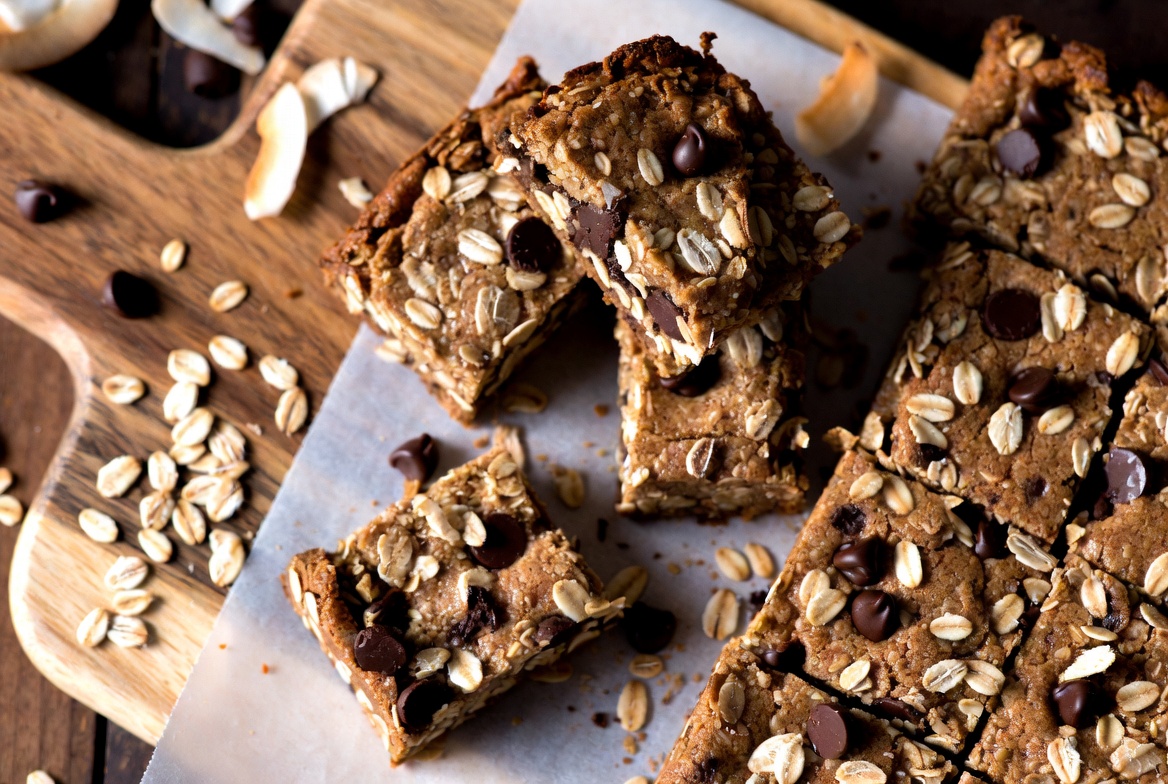
Store-bought protein bars come wrapped in plastic and packed with syrups, gums, and ingredients you can’t pronounce. You can do better in your own kitchen. These baked nut butter bars give you real, functional nutrition — peanut butter and almond butter for healthy fats and protein, eggs and grass-fed gelatin for structure and amino acids, and a quiet team of digestive supporters (inulin, psyllium, ginger, and optional garlic honey) working behind the scenes.
They’re chewy with a slight crisp edge, lightly sweetened with coconut sugar, and studded with dark chocolate. Press them firmly, bake them low, and let them cool completely — that patience is what gives you clean cuts and bars that hold together in your bag. Make a batch on Sunday and you’ve got a week of grab-and-go fuel you can feel good about.
Functional Baked Nut Butter Protein Bars
(Peanut Butter + Almond Butter Version)
Functional Baked Nut Butter Protein Bars
Chewy, whole-food protein bars—peanut and almond butter on rolled oats and almond flour, with eggs, grass-fed gelatin, and gut-supporting inulin, psyllium, and ginger.
Ingredients
Equipment
- 8×8-inch baking pan
- Parchment paper
Method
- Preheat the oven to 350°F (175°C). Line an 8×8-inch pan with parchment, leaving overhang on the sides for easy removal.
- Bloom the gelatin. Sprinkle the gelatin over 2–3 tbsp of the milk or water and let sit until wrinkly, then stir until mostly dissolved. Set aside.
- Mix the dry ingredients. In a large bowl, whisk together the oats, almond flour, protein powder, coconut flakes, chocolate chips, cinnamon, inulin, psyllium, beet powder, ginger, optional carrot, baking powder, and salt.
- Prepare the wet ingredients. Whisk the 3 eggs until smooth, then add the melted coconut oil, coconut sugar, vanilla, optional garlic honey, and the bloomed gelatin. Whisk until the coconut sugar starts to dissolve.
- Combine. Pour the wet into the dry and stir until a thick, cohesive dough forms that holds when pressed. Add milk or water 1 tbsp at a time if too dry; stir in the optional bromelain/papain at the very end.
- Press into the pan. Transfer to the pan and press down very firmly and evenly, packing the corners and edges well—this helps the bars hold together when cut.
- Bake , until the edges are lightly golden and the center is set (a toothpick comes out with a few moist crumbs). Start checking at and don’t overbake.
- Cool completely in the pan (at least ). For cleaner cuts, refrigerate after they reach room temperature.
- Cut and store. Lift out using the parchment, cut into 12 bars, and store airtight in the fridge up to 7 days or the freezer for 2–3 months.
Notes
- Cooling completely is important—it’s what gives clean cuts and bars that hold together in your bag.
- Texture: chewy with a slight crisp edge; psyllium, gelatin, and eggs give excellent structure.
- Sweetness: 3 tbsp coconut sugar is mild—use 4 tbsp for sweeter bars or 2 tbsp for less.
- If using fresh grated beet, squeeze out as much liquid as possible so the bars aren’t too wet.
- Digestion: psyllium + inulin + ginger + optional garlic honey add strong digestive support, especially with the nut butters.
Where it lands on the Intestinal food lists
Cross-referenced against Carolyn Mein’’s food lists for the Intestinal body type:
Solidly type-aligned — every food is “Frequently” or “Moderately” on a good day (2 in the top tier) and none are “Rarely” foods, though several ease back under stress.
- Peanut butter Frequently
- Beets Frequently
- Oats Moderately holds under stress
- Almonds (raw, roasted) Moderately
- Almond butter Moderately
- Coconuts Moderately
- Coconut oil Moderately holds under stress
- Carrots Moderately holds under stress
- Eggs Moderately
- Chocolate / chocolate desserts Moderately
- Honey Moderately
- Salt Moderately holds under stress
Scored against Carolyn Mein’s Intestinal Profile. See the full Healthy vs. Sensitive crosswalk.